Reaktionsgleichung
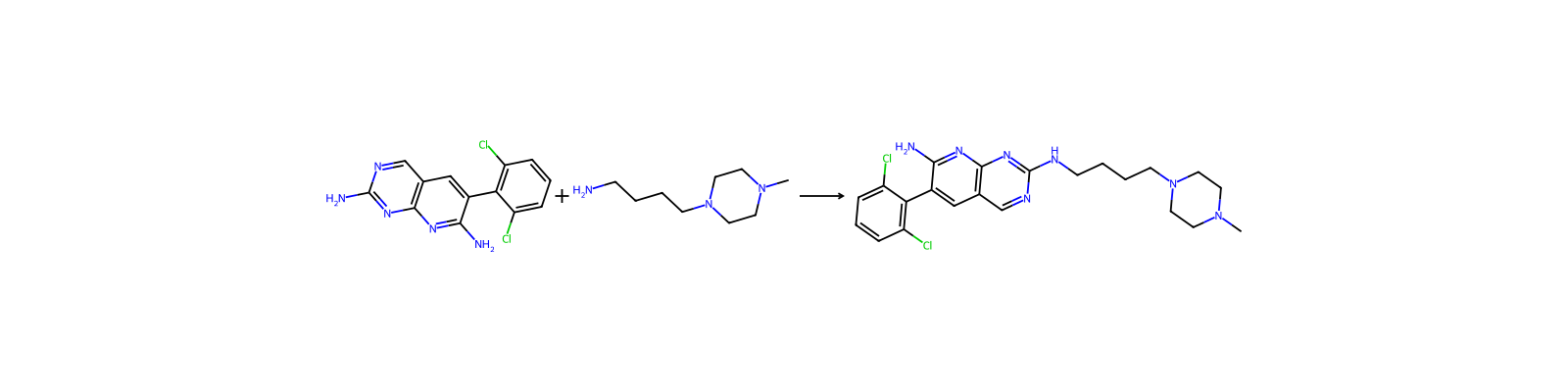
[NH2:1][C:2]1[N:3]=[CH:4][C:5]2[CH:11]=[C:10]([C:12]3[C:17]([Cl:18])=[CH:16][CH:15]=[CH:14][C:13]=3[Cl:19])[C:9]([NH2:20])=[N:8][C:6]=2[N:7]=1.N[CH2:22][CH2:23][CH2:24][CH2:25][N:26]1[CH2:31][CH2:30][N:29]([CH3:32])[CH2:28][CH2:27]1>>[NH2:20][C:9]1[C:10]([C:12]2[C:17]([Cl:18])=[CH:16][CH:15]=[CH:14][C:13]=2[Cl:19])=[CH:11][C:5]2[CH:4]=[N:3][C:2]([NH:1][CH2:22][CH2:23][CH2:24][CH2:25][N:26]3[CH2:27][CH2:28][N:29]([CH3:32])[CH2:30][CH2:31]3)=[N:7][C:6]=2[N:8]=1Komponenten
3


Versuchsvorschrift
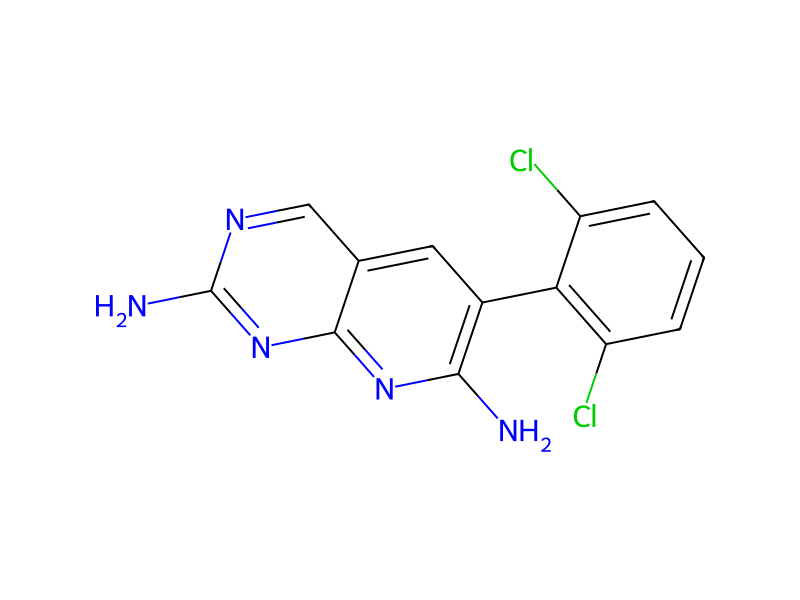
Following the procedure of Example 20, 2.0 g of 2,7-diamino-6-(2,6-dichlorophenyl)-pyrido[2,3-d]pyrimidine from Example 1 was reacted with 15 mL of 1-(4-aminobutyl)-4-methyl-piperazine to give the title compound.
Quellen und Nachweise
- ORD-Eintrag
- ord-028f0867c6414e2baa7beafce58df965
- Quelldatensatz
- uspto-grants-1998_03
- Patentnummer
- US05733913
Verknüpfte Notizen
Wird geladen…