Chlorosulfonic acid → HCID 178458849, Verbindung
HRID 35764
Reaktionsgleichung

[OH:1][C:2]1[CH2:7][CH:6]([C:8]2[C:13]([CH3:14])=[CH:12][C:11]([CH3:15])=[CH:10][C:9]=2[CH3:16])[CH2:5][C:4](=[O:17])[C:3]=1[C:18](=[O:21])[CH2:19][CH3:20].[Cl:22][S:23](O)(=[O:25])=[O:24]>C(Cl)(Cl)Cl>[OH:17][C:4]1[CH2:5][CH:6]([C:8]2[C:13]([CH3:14])=[CH:12][C:11]([CH3:15])=[C:10]([S:23]([Cl:22])(=[O:25])=[O:24])[C:9]=2[CH3:16])[CH2:7][C:2](=[O:1])[C:3]=1[C:18](=[O:21])[CH2:19][CH3:20]Komponenten
4
Edukt 2
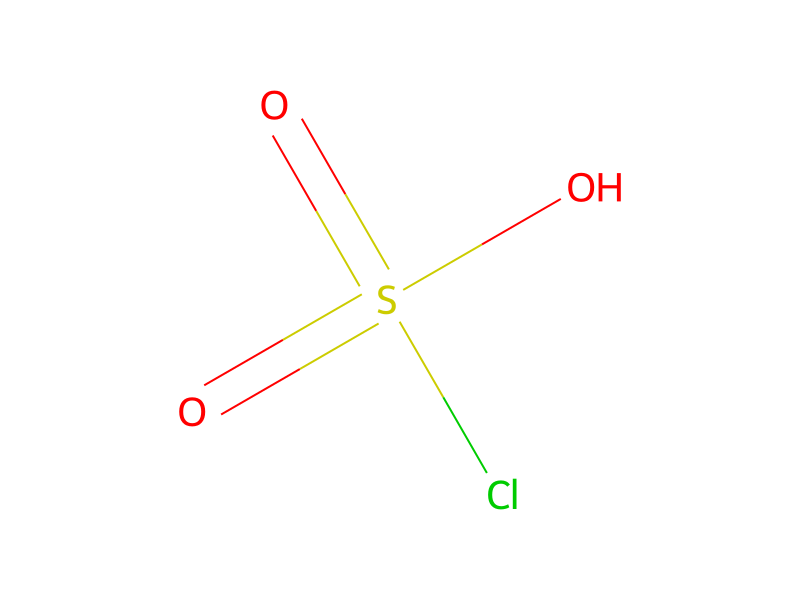

Produkt 1

Reagenzien, Katalysatoren, Lösungsmittel 1

Reaktionsbedingungen
- Temperatur
- 20 °C
Versuchsvorschrift
A solution of 3-hydroxy-5-mesityl-2-propionylcyclohex-2-en-1-one (1.8 g) in chloroform (20 ml) was stirred and cooled to 0° C. during the dropwise addition of chlorosulphonic acid (10 ml). The mixture was stirred for four hours at 20° C. and then poured into ice-water and the aqueous phase was extracted with chloroform (50 ml). The organic phase was dried over anhydrous sodium sulphate and the solvent was removed by evaporation under reduced pressure using a rotary evaporator. The product 3-hydroxy-5-(2,4,6-trimethyl-3-chlorosulphonylphenyl)-2-propionylcyclohex-2-en-1-one was isolated as a brown oil (2.4 g, 97%). Proton magnetic resonance spectrum (CDCl3 ; δ in ppm): 1.16 (3H, t); 2.47 (3H, s); 2.69 (3H, s); 2.80 (3H, s); 2.7-4.0 (7H, m); 7.05 (1H, s); 18.30 (1H, s).