Potassium Carbonate → 4-Bromo-4'-chlorobiphenyl
Reaktionsgleichung

[Cl:1][C:2]1[CH:7]=[CH:6][C:5](I)=[CH:4][CH:3]=1.[Br:9][C:10]1[CH:15]=[CH:14][C:13](B(O)O)=[CH:12][CH:11]=1.C(=O)([O-])[O-].[K+].[K+].C(OCC)(=O)C.CCCCCC>C1(C)C=CC=CC=1>[Cl:1][C:2]1[CH:7]=[CH:6][C:5]([C:13]2[CH:14]=[CH:15][C:10]([Br:9])=[CH:11][CH:12]=2)=[CH:4][CH:3]=1Komponenten
Edukt 4


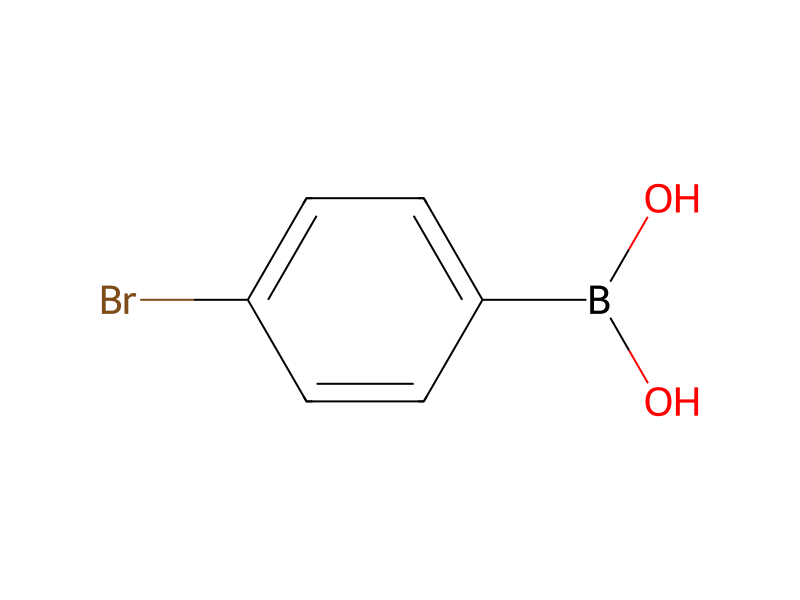

Produkt 1

Reagenzien, Katalysatoren, Lösungsmittel 1

Reaktionsbedingungen
- Temperatur
- 90 °C
Versuchsvorschrift
A mixture of 4-chloro-iodobenzene (0.99 g, 4.15 mmol), (4-bromophenyl)boronic acid (1.0 g, 4.98 mmol), anhydrous potassium carbonate (860 mg, 6.22 mmol) and dichlorobis(triphenylphosphine) palladium (II) (87 mg, 0.12 mmol) in toluene (40 ml) was heated at 90° C. for 4 hours under an argon atmosphere. The solvent was removed under reduced pressure and the residue was dissolved in dichloromethane (50 ml). The organic solution was washed successively with 1M hydrochloric acid (2×30 ml), saturated aq. sodium hydrogen carbonate (2×30 ml) and brine, dried over anhydrous magnesium sulfate and filtered. The solvent was removed under reduced pressure to leave an orange solid, which was purifed by trituration with ethyl acetate-hexane (1:6) to provide 4'-chloro-4-bromo-biphenyl (0.5 g, 45%) as a pale orange solid. 1H-NMR; δ (CDCl3) 7.49 (m).
Aufarbeitung
- customThe solvent was removed under reduced pressure
- dissolutionthe residue was dissolved in dichloromethane (50 ml)
- washThe organic solution was washed successively with 1M hydrochloric acid (2×30 ml), saturated aq. sodium hydrogen carbonate (2×30 ml) and brine
- dry with materialdried over anhydrous magnesium sulfate
- filtrationfiltered
- customThe solvent was removed under reduced pressure
- customto leave an orange solid, which
Quellen und Nachweise
- ORD-Eintrag
- ord-b824bcad550e41a1baf4116de6f73316
- Quelldatensatz
- uspto-grants-1998_11
- Patentnummer
- US05840974
Notizen zur Reaktion
Wird geladen…