StartseiteMCPWorkbenchSkills
StartseiteWorkbenchBenachrichtigungenMein Bereich
llms.txt · MCP-AnleitungDatenschutz · Nutzungsbedingungen · Supportv1.8.3
  1. Startseite
  2. /Reaktion

Sodium amide → 2-Pyridinamine, 4-(1-butylpentyl)-

HRID 359904
Drucken

Reaktionsgleichung

Reaktionsgleichung von HRID 359904
[NH2-:1].[Na+].C(O)(=O)CCCCCCC/C=C\CCCCCCCC.[CH3:23][CH2:24][CH2:25][CH2:26][CH:27]([C:32]1[CH:37]=[CH:36][N:35]=[CH:34][CH:33]=1)[CH2:28][CH2:29][CH2:30][CH3:31]>C1(C)C(C)=CC=CC=1>[NH2:1][C:34]1[CH:33]=[C:32]([CH:27]([CH2:26][CH2:25][CH2:24][CH3:23])[CH2:28][CH2:29][CH2:30][CH3:31])[CH:37]=[CH:36][N:35]=1
KomponentenReaktionsbedingungenVersuchsvorschriftAufarbeitungQuellen und NachweiseNotizen zur Reaktion

Komponenten

5

Edukt 3

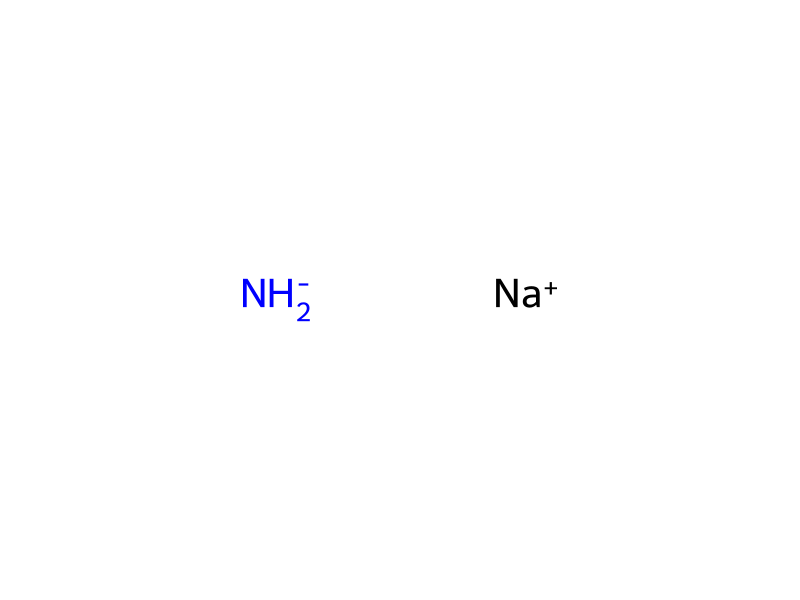
HCID 24533Sodium amideHCID 762964-(1-Butylpentyl)pyridineHCID 445639Oleic Acid

Produkt 1

HCID 73304822-Pyridinamine, 4-(1-butylpentyl)-Ausbeute 67,3 %

Reagenzien, Katalysatoren, Lösungsmittel 1

HCID 7237O-XyleneLösungsmittel

Reaktionsbedingungen

Temperatur
173 °C

Versuchsvorschrift

A mixture of 50.7 g (1.3 moles) of sodamide preformed in situ as in Example 1, 350 cc of xylene containing 0.1 cc of oleic acid, and 205 g (1 mole) of 4-(5-nonyl)pyridine was placed in a Magne Drive such as the one described in Example 2. The autoclave was closed and purged of air with nitrogen, pressurized to 10 psig with ammonia and 200 psig with nitrogen. The pressure relief valve was set at 350 psig. The mixture was heated to 173° C. at which temperature amination began. The temperature was reduced and the reaction was run at 158°-163 ° C. for 8.7 hours. Hydrogen was evolved during this time. The autoclave was cooled to room temperature, vented to atmospheric pressure and hydrolyzed with 150 cc of water. The xylene phase was separated and the bottom aqueous caustic phase was re-extracted with 25 cc of xylene. Both xylene extracts were combined and distilled to give 2-amino-4-(5-nonyl)pyridine boiling at 197°-225 ° C. at 22 mm Hg. The yield was 67.3%. This result substantially increases the yield of 2-amino-4-(5-nonyl)pyridine over that reported previously by one of the applicants, McGill, U.S. Pat. No. 4,177,349 (1979) and McGill, U.S. Pat. No. 4,267,335 (1981). In this prior work, 4-(5-nonyl)pyridine was shown to prefer to couple in the presence of sodamide, giving high yields of 4,4'-di-(5-nonyl)-2,2'-bipyridyl but only low yields of 2-amino-4-(5-nonyl)pyridine. This increased yield of 2-amino-4 (5-nonyl)pyridine is of importance because the compound has valuable biocidal properties.

Aufarbeitung

  1. customThe autoclave was closed
  2. custompurged of air with nitrogen
  3. temperatureThe autoclave was cooled to room temperature
  4. customThe xylene phase was separated
  5. extractionthe bottom aqueous caustic phase was re-extracted with 25 cc of xylene
  6. distillationdistilled

Quellen und Nachweise

ORD-Eintrag
ord-c41f91cb81934173802eec09868c6d83
Quelldatensatz
uspto-grants-1991_03
DOI
10.6084/m9.figshare.5104873.v1
Patentnummer
US05003069

Notizen zur Reaktion

Auf dieser SeiteKomponentenReaktionsbedingungenVersuchsvorschriftAufarbeitungQuellen und NachweiseNotizen zur Reaktion
