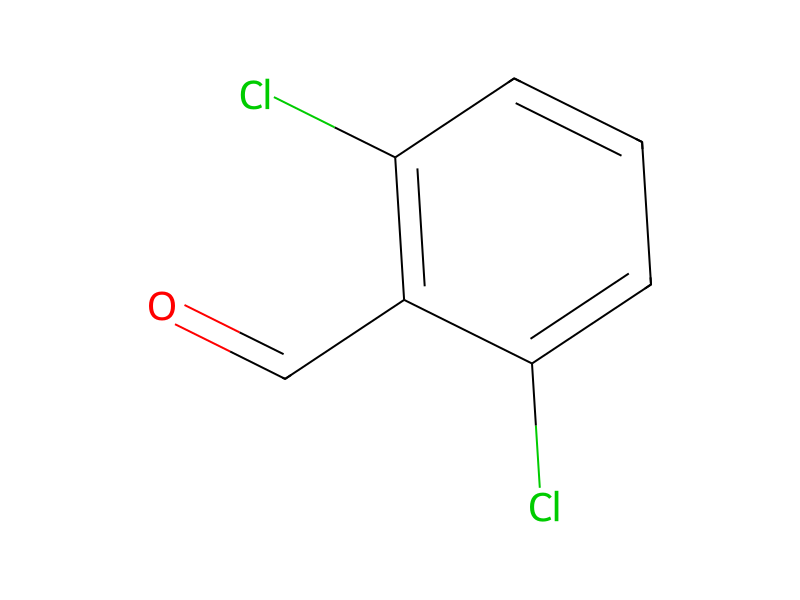
Cl.[CH3:2][O:3][C:4](=[O:11])[CH2:5][CH2:6][C@H:7]([NH2:10])[CH2:8][F:9].C(N(CC)CC)C.C1C=CC=CC=1.[Cl:25][C:26]1[CH:33]=[CH:32][CH:31]=[C:30]([Cl:34])[C:27]=1[CH:28]=O>C(OCC)(=O)C>[Cl:25][C:26]1[CH:33]=[CH:32][CH:31]=[C:30]([Cl:34])[C:27]=1[CH:28]=[N:10][C@H:7]([CH2:8][F:9])[CH2:6][CH2:5][C:4]([O:3][CH3:2])=[O:11]0.36 g of 4 and 0.27 ml of triethylamine were mixed with 20 ml of benzene containing 0.5 g of 3A molecular sieve. 0.33 g of 2,6-dichlorobenzaldehyde was added and the mixture was stirred at room temperature overnight. 20 ml of ethyl acetate was added to the mixture, then it was filtered and the solvent was evaporated from the filtrate. The residue was dissolved in ethyl acetate, the solution was washed with saturated aqueous sodium bicarbonate solution, dried (Na2SO4) and the solvent was evaporated from the filtrate. The residue was thin layer chromatographed, using a 4:16:80 v:v:v mixture of tetrahydrofuran, ethyl acetate and hexane as eluent. Workup gave 20, as a yellow oil.