2-Methylpiperazine → Lomefloxacin
HRID 370716
Reaktionsgleichung

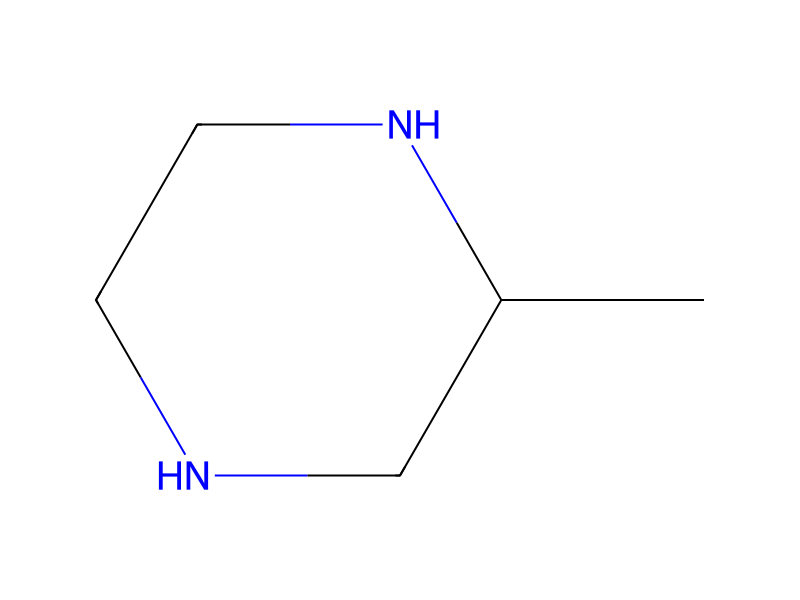
[CH2:1]([N:3]1[C:12]2[C:7](=[CH:8][C:9]([F:15])=[C:10](F)[C:11]=2[F:13])[C:6](=[O:16])[C:5]([C:17]([O:19]CC)=[O:18])=[CH:4]1)[CH3:2].[CH3:22][CH:23]1[CH2:28][NH:27][CH2:26][CH2:25][NH:24]1>N1C=CC=CC=1>[CH2:1]([N:3]1[C:12]2[C:7](=[CH:8][C:9]([F:15])=[C:10]([N:27]3[CH2:26][CH2:25][NH:24][CH:23]([CH3:22])[CH2:28]3)[C:11]=2[F:13])[C:6](=[O:16])[C:5]([C:17]([OH:19])=[O:18])=[CH:4]1)[CH3:2]Komponenten
4
Edukt 2

Produkt 1

Reagenzien, Katalysatoren, Lösungsmittel 1

Versuchsvorschrift
A mixture of 1.50 g of ethyl 1-ethyl-6,7,8-trifluoro-1,4-dihydro-4-oxoquinoline-3-carboxylate, 1.50 g of 2-methylpiperazine and 5 ml of pyridine was heated for 3 hours under reflux. The solvent of the reaction mixture was evaporated and the residue was dissolved in chloroform. The solution was washed with water, dried and evaporated. The residue was recrystallized from a mixture of benzene and isopropyl ether to give 1.00 g of the title compound as colorless needles, M.p. 126.5°-127.5° C.