Reaktionsgleichung

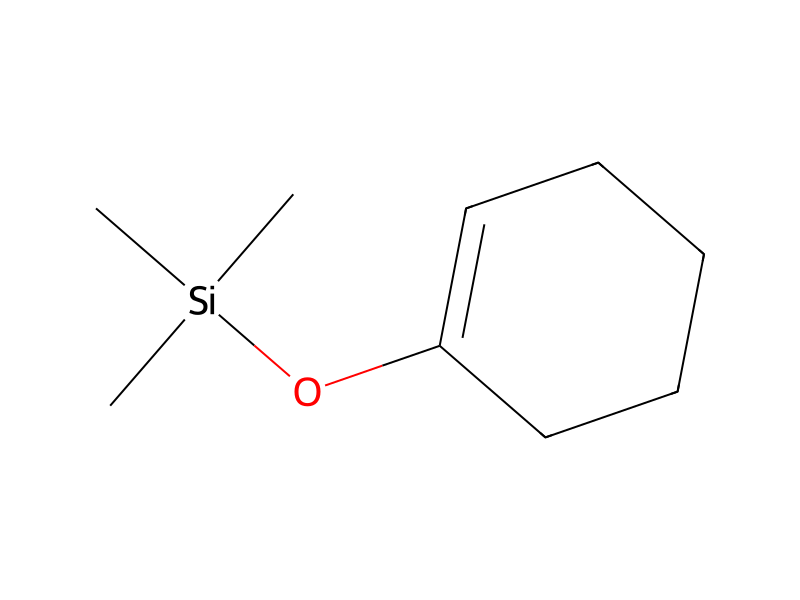
C[O:2][C:3]1[CH:20]=[CH:19][CH:18]=[C:17](OC)[C:4]=1C([C@@]([C@H](C(O)=O)O)(O)C(O)=O)=O.C[Si](C)(C)OC1CCCCC=1.[CH3:34][O:35][C:36]1[CH:37]=[C:38]([CH:41]=[CH:42][CH:43]=1)[CH:39]=[O:40].Cl>C(#N)CC.O1CCCC1>[OH:40][CH:39]([C@H:4]1[CH2:17][CH2:18][CH2:19][CH2:20][C:3]1=[O:2])[C:38]1[CH:41]=[CH:42][CH:43]=[C:36]([O:35][CH3:34])[CH:37]=1Komponenten
7
Edukt 4



Produkt 1

Reagenzien, Katalysatoren, Lösungsmittel 2


Reaktionsbedingungen
- Temperatur
- 0 °C
Versuchsvorschrift
To a solution of (R,R)-mono(2,6-dimethoxybenzoyl)tartaric acid (314 mg) in propionitrile (5 ml) was added 1M BH3 solution (1.0 ml) in tetrahydrofuran at 0° C. under N2. The reaction mixture was stirred for 1 hour at 0° C., and then the solution was cooled to -78° C. To this were added 1-(trimethylsilyl-oxy)cyclohexene (1.0 g) and 3-methoxybenzaldehyde (680 mg) successively. After stirring for 2 hours, the solution was poured into 1N-hydrochloric acid and the product was extracted with ether. The solvent was evaporated, and the residue was treated with 1N-hydrochloric acid-tetrahydrofuran solution (2 ml, 1:1). Usual chromatographic separation gave (2R)-2-(1-hydroxy-1-(3-methoxyphenyl)methyl]cyclohexanone (350 mg).
Aufarbeitung
- temperaturethe solution was cooled to -78° C
- stirringAfter stirring for 2 hours
- extractionthe product was extracted with ether
- customThe solvent was evaporated
- additionthe residue was treated with 1N-hydrochloric acid-tetrahydrofuran solution (2 ml, 1:1)
- customUsual chromatographic separation
Quellen und Nachweise
- ORD-Eintrag
- ord-2cf3118a80684934bb0069fd596a3ca9
- Quelldatensatz
- uspto-grants-2000_02
- Patentnummer
- US06025375
Verknüpfte Notizen
Wird geladen…