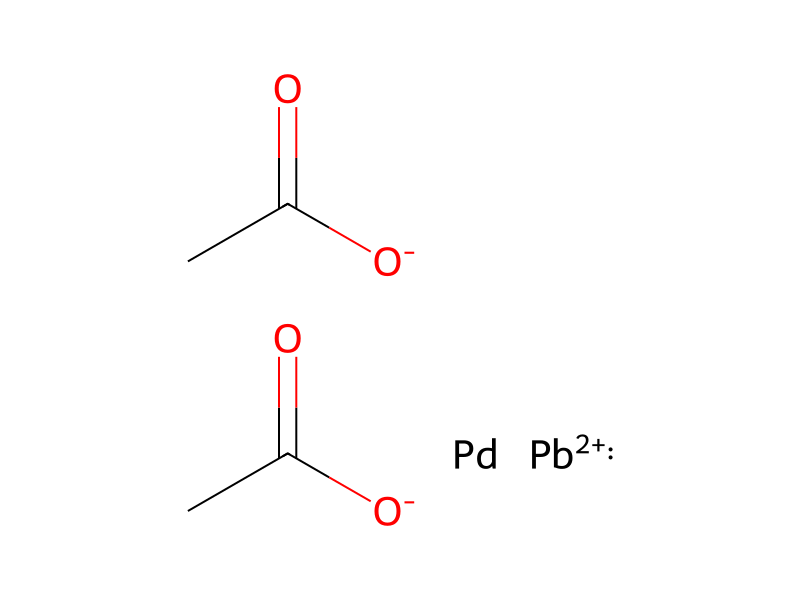
[CH3:1][C:2]1[N:7]=[CH:6][C:5]([C:8]#[C:9][C:10]2[C:18]3[NH:17][C:16]4[CH:19]5[CH2:25][CH2:24][N:22]([CH2:23][C:15]=4[C:14]=3[CH:13]=[CH:12][CH:11]=2)[CH2:21][CH2:20]5)=[CH:4][CH:3]=1>CO.[Pd].CC([O-])=O.CC([O-])=O.[Pb+2]>[CH3:1][C:2]1[N:7]=[CH:6][C:5](/[CH:8]=[CH:9]\[C:10]2[C:18]3[NH:17][C:16]4[CH:19]5[CH2:25][CH2:24][N:22]([CH2:23][C:15]=4[C:14]=3[CH:13]=[CH:12][CH:11]=2)[CH2:21][CH2:20]5)=[CH:4][CH:3]=1The product of Example 3 (100.9 mg, 0.308 mmol) was dissolved in methanol (5 mL). Lindlar catalyst (5% Pd on CaCO3 poisoned with lead, Aldrich, 9.8 mg) was added to the reaction mixture. The reaction flask was purged with nitrogen then purged with hydrogen, and the mixture was stirred under hydrogen (1 atm) at room temperature for 3 hours. The flask was purged with nitrogen and the reaction mixture was filtered. The filtrate was concentrated under vacuum, and the residue was purified by reverse-phase HPLC [Waters XBridge™ RP18 column, 5 μm, 30×100 mm, flow rate 40 mL/minute, 20-99% gradient of methanol in buffer (0.1 M aqueous ammonium bicarbonate, adjusted to pH 10 with ammonium hydroxide)] to afford the title compound: 1H NMR (300 MHz, methanol-d4) δ ppm 2.01-2.10 (m, 4H), 2.41 (s, 3H), 2.97-3.13 (m, 3H), 3.21-3.26 (m, 2H), 26 (s, 2H), 6.69 (d, J=12.2 Hz, 1H), 6.88-6.90 (m, 2H), 6.99 (d, J=11.9 Hz, 1H), 7.04 (d, J=8.1 Hz, 1H), 7.21-7.26 (m, 1H) 7.44 (dd, J=8.2, 2.0 Hz, 1H), 8.16 (d, J=2.4 Hz, 1H); MS (APCI) m/z 330 (M+H)+.