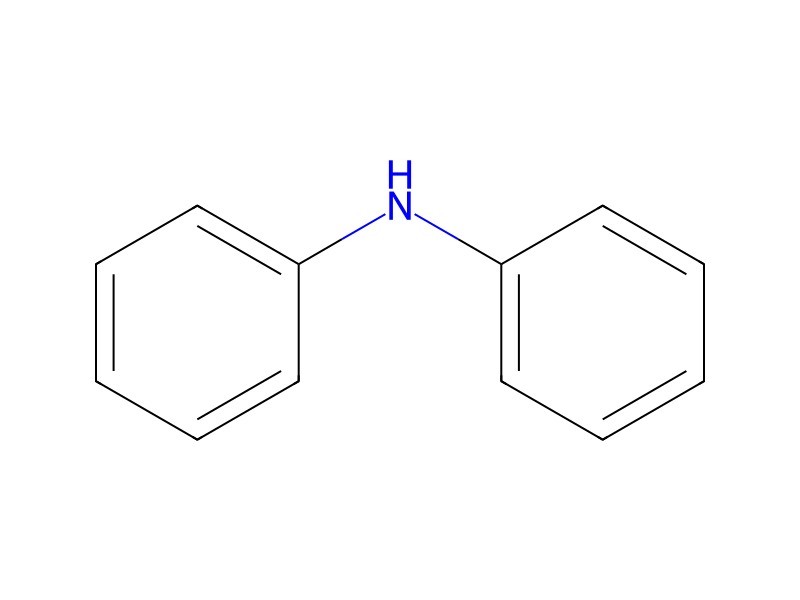
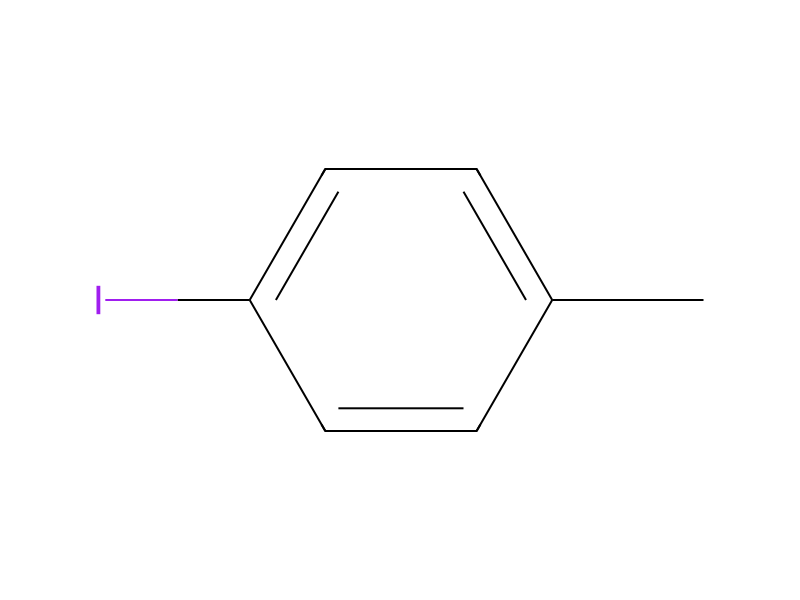
[C:1]1([NH:7][C:8]2[CH:13]=[CH:12][CH:11]=[CH:10][CH:9]=2)[CH:6]=[CH:5][CH:4]=[CH:3][CH:2]=1.I[C:15]1[CH:20]=[CH:19][C:18]([CH3:21])=[CH:17][CH:16]=1.C(=O)([O-])[O-].[Na+].[Na+]>[Cu].ClC1C=CC=CC=1Cl>[CH3:21][C:18]1[CH:19]=[CH:20][C:15]([N:7]([C:8]2[CH:9]=[CH:10][CH:11]=[CH:12][CH:13]=2)[C:1]2[CH:6]=[CH:5][CH:4]=[CH:3][CH:2]=2)=[CH:16][CH:17]=1To 30 ml of o-dichlorobenzene, 4.5 g (27 mmol) of diphenylamine, 11.0 g (51 mmol) of p-iodotoluene, 5.5 g (40 mmol) of anhydrous sodium carbonate and 1.1 g of copper powder were added. The mixture was heated and refluxed with stirring for 7 hours. After the reaction was completed, the reaction solution was filtered. The filtrate was successively washed with an aqueous 3 to 5% sodium thiosulfate solution and saturated brine. The organic layer was dried with anhydrous sodium sulfate, and thereafter the solvent was removed. The resulting crude reaction product was recrystallized from ethanol to obtain 4-methyltriphenylamine in an amount of 5.7 g (yield: 81.4%).