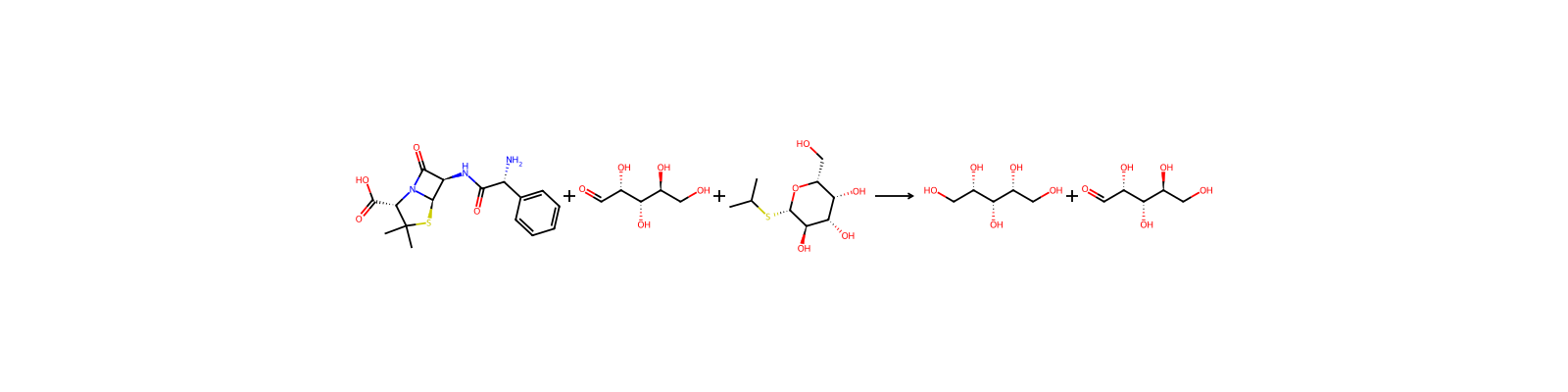
Beteiligte Stoffe
| Rolle | Name | HCID | Einwaage |
|---|
| Edukt | Ampicillin | HCID 6249 | — |
| Edukt | isopropyl beta-D-thiogalactopyranoside | HCID 656894 | — |
| Edukt | aldehydo-L-arabinose | HCID 5460291 | — |
| Produkt | aldehydo-L-arabinose | HCID 5460291 | — |
| Produkt | HCID 178418489 | HCID 178418489 | — |
Reaktionsschritte
To test the activity of the XR/Lad1/Alx1 operon, plasmid pATX112 was inserted into strain ZUC99 by electroporation (ZUC99/pATX112). The strain was inoculated from a single colony into 3 mL LB media supplemented with ampicillin (200 mg/L) and incubated overnight at 30° C. with shaking (250 RPM). After incubation, an aliquot of the culture was diluted 100-fold into 20 mL of fresh LB media contain L-arabinose (1% w/v) and ampicillin (200 mg/L) and incubated (30° C., 250 RPM) for 2 hrs. The culture was induced with isopropyl-β-D-thiogalactopyranoside (IPTG, 1 mM). The culture was incubated at 30° C. with shaking (250 RPM) and aliquots were removed at various time points after the IPTG induction. The samples were monitored for xylitol formation from L-arabinose by HPLC analysis using an Aminex HPX-87P column (BioRad, USA). After 24 hrs post induction, the XR/Lad1/Alx1 operon strain (ZUC99/pATX112) displayed a 2% conversion of L-arabinose to xylitol, showing that the recombinant bacterium acquires the ability to produce xylitol from L-arabinose (Table 6).
Herkunft & Nachweise
| DOI | 10.6084/m9.figshare.5104873.v1 |
|---|
| Patentnummer | US08367346B2 |
|---|
| Quelldatensatz | uspto-grants-2013_02 |
|---|
| ORD ID | ord-7983ec4dee9d4fc5808a36db902eeb1a |
|---|
| Quellennotiz | uspto-grants-2013_02 |
|---|