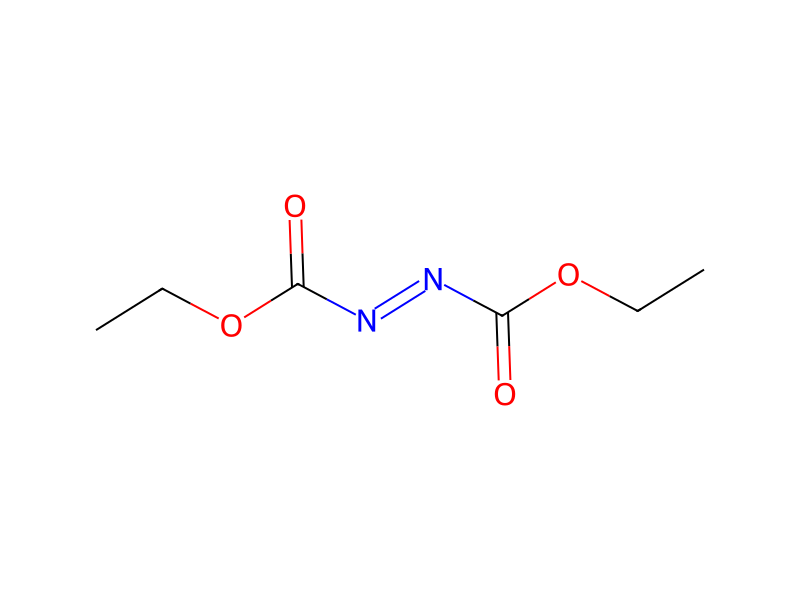
[O:1]=[C:2]1[NH:7][N:6]=[C:5]([C:8]#[N:9])[CH:4]=[CH:3]1.[CH2:10]([O:12][C:13](=[O:23])[NH:14][C:15]1[CH:20]=[CH:19][CH:18]=[C:17]([CH2:21]O)[CH:16]=1)[CH3:11].C1(P(C2C=CC=CC=2)C2C=CC=CC=2)C=CC=CC=1.N(C(OCC)=O)=NC(OCC)=O>C1COCC1>[CH2:10]([O:12][C:13](=[O:23])[NH:14][C:15]1[CH:20]=[CH:19][CH:18]=[C:17]([CH2:21][N:7]2[C:2](=[O:1])[CH:3]=[CH:4][C:5]([C:8]#[N:9])=[N:6]2)[CH:16]=1)[CH3:11]Under a nitrogen atmosphere, 1 g (8.3 mmol) of 6-oxo-1,6-dihydropyridazine-3-carbonitrile (prepared in accordance with WO 2002/079200) is suspended in 50 ml of THF, and 2.4 g (12.4 mmol) of ethyl(3-hydroxymethylphenyl)carbamate and 5 g (12.4 mmol) of triphenyphosphine are added. 1.95 ml (12.4 mmol) of diethyl azodicarboxylate is added dropwise to this suspension at 2-10° C. with ice-cooling. The suspension is stirred at room temperature for 15 h. The suspension is filtered, and the filter residue is washed with dichloromethane, the filtrate is evaporated to dryness, taken up in ethyl acetate, and the organic phase is extracted with 1N HCl and saturated sodium hydrogencarbonate solution. The organic phase is subsequently dried over sodium sulfate and evaporated to dryness.