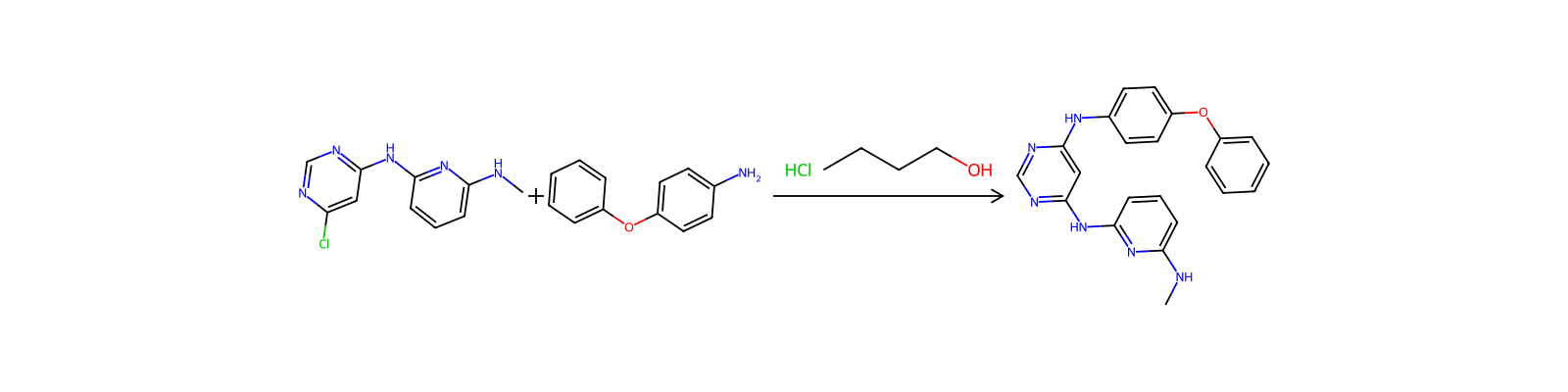
Cl[C:2]1[N:7]=[CH:6][N:5]=[C:4]([NH:8][C:9]2[CH:14]=[CH:13][CH:12]=[C:11]([NH:15][CH3:16])[N:10]=2)[CH:3]=1.[O:17]([C:24]1[CH:30]=[CH:29][C:27]([NH2:28])=[CH:26][CH:25]=1)[C:18]1[CH:23]=[CH:22][CH:21]=[CH:20][CH:19]=1>Cl.C(O)CCC>[CH3:16][NH:15][C:11]1[N:10]=[C:9]([NH:8][C:4]2[CH:3]=[C:2]([NH:28][C:27]3[CH:26]=[CH:25][C:24]([O:17][C:18]4[CH:23]=[CH:22][CH:21]=[CH:20][CH:19]=4)=[CH:30][CH:29]=3)[N:7]=[CH:6][N:5]=2)[CH:14]=[CH:13][CH:12]=1A solution of N2-(6-chloropyrimidin-4-yl)-N6-methylpyridine-2,6,diamine (0.3 g 1.27 mmol), 4-phenoxy aniline (0.28 g, 1.52 mmol) and conc. HCl (2 drops) in n-butanol (2 mL) was subjected to microwave irradiation (120° C., 1 h). The reaction mixture was cooled, was concentrated under reduced pressure, and the residue was diluted with CH2Cl2 (5 mL). The dichloromethane solution was washed with NaHCO3 (2 mL), water (2 mL), and brine (2 mL), and was dried over Na2SO4. Filtration followed by concentration under reduced pressure gave a residue which was purified by column chromatography (SiO2, 60-120, chloroform/methanol, 9/1) to give N4-(6-(methylamino)pyridine-2-yl)-N6-(4-phenoxyphenyl)pyrimidine-4,6-diamine (0.2 g, 41%) as a light brown solid.