Ethylene Oxide → Triethanolamine
HRID 411885
Reaktionsgleichung

C1OC1.C(CN)O.[NH:8]([CH2:12][CH2:13][OH:14])[CH2:9][CH2:10][OH:11].[N:15]([CH2:22][CH2:23][OH:24])([CH2:19][CH2:20][OH:21])[CH2:16][CH2:17][OH:18]>>[NH:8]([CH2:12][CH2:13][OH:14])[CH2:9][CH2:10][OH:11].[N:15]([CH2:22][CH2:23][OH:24])([CH2:19][CH2:20][OH:21])[CH2:16][CH2:17][OH:18]Komponenten
4



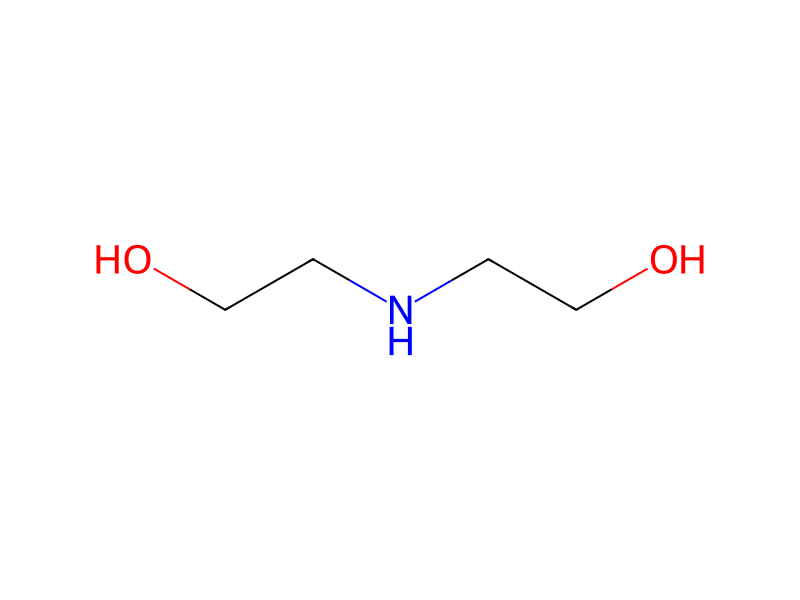
Reaktionsbedingungen
- Temperatur
- 150 °C
Versuchsvorschrift
Though the temperature increased up to 150° C. by the heat of reaction over the length of about 20 mm from the inlet at the initial stage, the temperature came to have a profile barely rising to nearly 150° C. after 500 hrs near the outlet of the catalytic layer. As a result, deterioration in catalytic activity was observed. The results obtained are as follows: the conversion of ethylene oxide was 100%; and the ratio of each component in the produced ethanolamines was: monoethanolamine/diethanolamine/triethanolamine=69/30/1. Diethanolamine was produced at a high selectivity while a small amount of triethanolamine was produced.