Reaktionsgleichung

F[C:2]1[CH:3]=[CH:4][CH:5]=[C:6]2[C:10]=1[NH:9][C:8](=[O:11])[CH2:7]2.BrC1C=CC=C2C=1NC(=O)C2.CC1C=CC=C2C=1NC(=O)C2.FC1C=C(F)C=C2C=1CC(=O)N2.[Cl:46]C1C=CC(Cl)=C2C=1CC(=O)N2.FC1C=C2C(=C(F)C=1)NC(=O)C2.C(C1C=C2C(=C(F)C=1)NC(=O)C2)CCC.C1(C2C=CC=C3C=2NC(=O)C3)CCCCC1.C1(C2C=CC=C3C=2NC(=O)C3)CC1>>[Cl:46][C:3]1[CH:2]=[C:10]2[C:6]([CH2:7][C:8](=[O:11])[NH:9]2)=[CH:5][CH:4]=1Komponenten
10
Edukt 9
 HCID 27732917-bromo-2,3-dihydro-1H-indol-2-one
 HCID 27789635,7-difluoro-1,3-dihydro-2H-indol-2-one
 HCID 30142252H-Indol-2-one, 1,3-dihydro-7-methyl-
 HCID 37343717-Fluoro-2,3-dihydro-1h-indol-2-one
 HCID 212820197-Cyclohexyloxindole
 HCID 212820374,6-Difluorooxindole
 HCID 212820667-Cyclopropyloxindole
 HCID 212820844,7-Dichloro-1,3-dihydro-2H-indol-2-one
 HCID 212820935-n-Butyl-7-fluorooxindole
Produkt 1
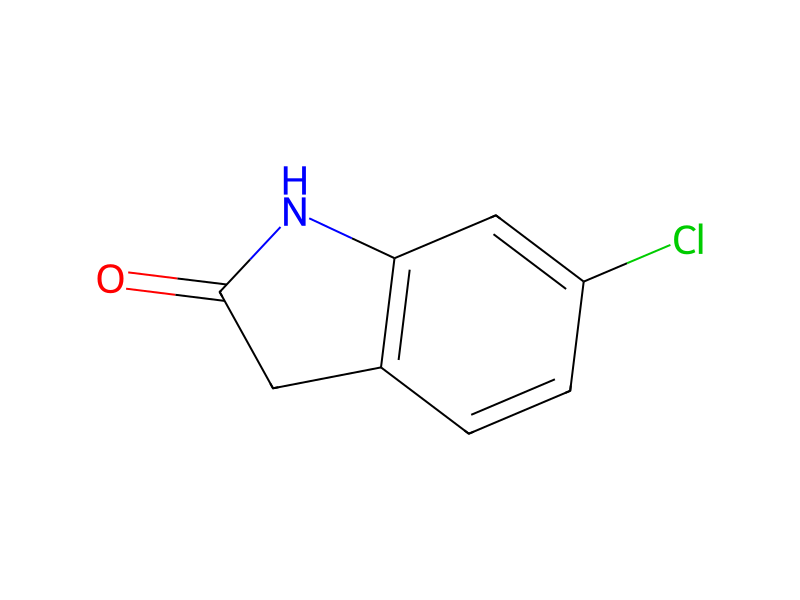
Versuchsvorschrift
In an analogous manner 4- and 6-fluoro- and bromooxindoles are prepared, as well as 7-fluorooxindole, 7-bromooxindole, 7-methyloxindole, 4,6-difluorooxindole, 4,7-dichlorooxindole, 5,7-difluorooxindole, 5-n-butyl-7-fluorooxindole, 7-cyclohexyloxindole and 7-cyclopropyloxindole.
Quellen und Nachweise
- ORD-Eintrag
- ord-6097ccf0a46845ff80838b4ff426690d
- Quelldatensatz
- uspto-grants-1988_12
- Patentnummer
- US04791129
Verknüpfte Notizen
Wird geladen…