Reaktionsgleichung

[CH2:1]([OH:23])[C@H:2]1[O:7][C@H:6]([O:8][C@H:9]2[C@H:14]([OH:15])[C@@H:13]([OH:16])[C@H:12]([OH:17])[O:11][C@@H:10]2[CH2:18][OH:19])[C@H:5]([OH:20])[C@@H:4]([OH:21])[C@@H:3]1[OH:22].[H][H]>[Ni]>[CH2:1]([OH:23])[C@H:2]1[O:7][C@H:6]([O:8][C@@H:9]([C@H:14]([OH:15])[C@@H:13]([OH:16])[CH2:12][OH:17])[C@H:10]([OH:11])[CH2:18][OH:19])[C@H:5]([OH:20])[C@@H:4]([OH:21])[C@@H:3]1[OH:22]Komponenten
4
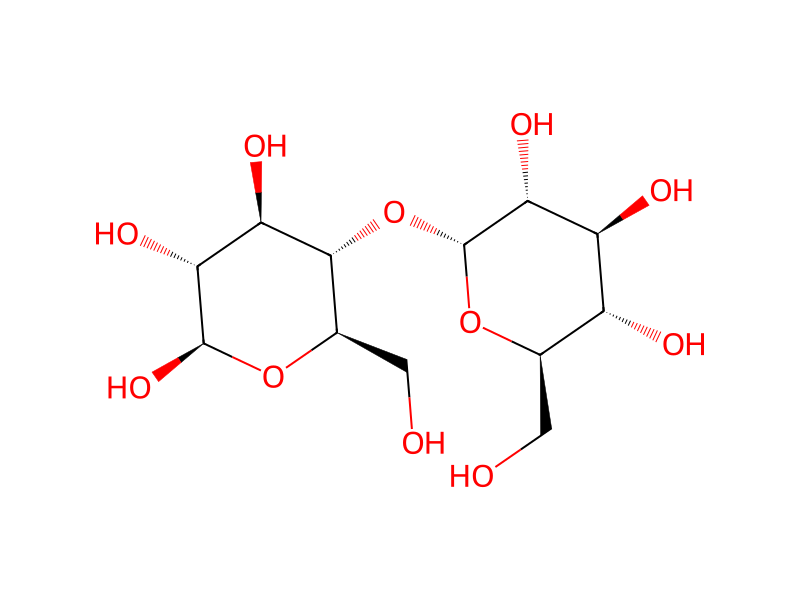


Reagenzien, Katalysatoren, Lösungsmittel 1

Versuchsvorschrift
A 50% aqueous solution of the highly-purified maltose was placed in an autoclave, and added with Raney nickel catalyst in an amount of 10%. Thereafter, the content was heated to 90°-125° C., and hydrogenation was effected at the temperature and a hydrogen pressure of 20-100 kg/cm2. After completion of the hydrogenation, the Raney nickel catalyst was removed, and the residual aqueous solution was purified by decolorization with activated carbon, and deionization with ion exchangers according to conventional methods, obtaining a highly-purified maltitol solution with a purity of 98.5%.
Aufarbeitung
- temperatureThereafter, the content was heated to 90°-125° C.
- customAfter completion of the hydrogenation, the Raney nickel catalyst was removed
- customthe residual aqueous solution was purified by decolorization with activated carbon, and deionization with ion exchangers
Quellen und Nachweise
- ORD-Eintrag
- ord-6d3bb0315e504c3db3692c33e7836381
- Quelldatensatz
- uspto-grants-1988_02
- Patentnummer
- US04725387
Verknüpfte Notizen
Wird geladen…