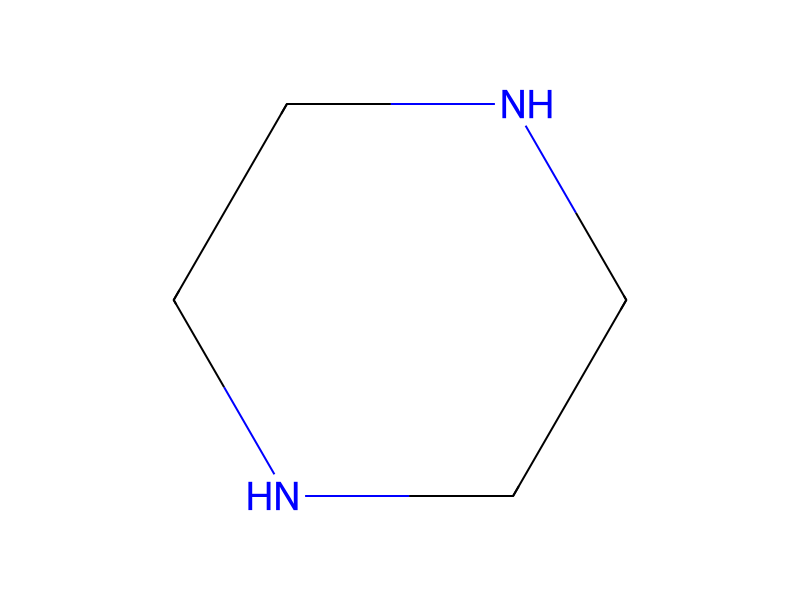
To a stirred solution of piperazine (10.8 g) in dry dichloromethane (160 ml) and triethylamine (20 ml) at 0° C. was added slowly a solution of 4-bromobenzenesulphonyl chloride (16 g) in dichloromethane (80 ml) and stirred for 24 hours. The reaction was then quenched by removal of the dichloromethane solvent by evaporation, taken up in water and extracted with ethyl acetate. The organic extracts were washed with aqueous sodium hydrogen carbonate solution, water, brine, dried (MgSO4) and then evaporated to give a white crystalline solid which was recrystallised from ethyl acetate/isohexane to afford 1-(4-bromophenylsulphonyl)piperazine (14.1 g) as a solid, m.p. 102-104° C.; microanalysis found: C, 39.5; H, 4.4; N, 9.1%: C10H13BrN2O2S requires: C, 39.4; H, 4.3; N, 9.2%; NMR (CDCl3): 1.52(s,1H), 2.97(dt,8H), 7.61(d,2H), 7.69(d,2H): MS m/z 305 (MH)+.