4-Methoxybenzyl alcohol → 2-Chloro-4-(4-methoxybenzyloxy)quinoline
Reaktionsgleichung

[Cl:1][C:2]1[CH:11]=[C:10](Cl)[C:9]2[C:4](=[CH:5][CH:6]=[CH:7][CH:8]=2)[N:3]=1.[H-].[Na+].C1OCCOCCOCCOCCOC1.[CH3:30][O:31][C:32]1[CH:39]=[CH:38][C:35]([CH2:36][OH:37])=[CH:34][CH:33]=1>C1COCC1>[Cl:1][C:2]1[CH:11]=[C:10]([O:37][CH2:36][C:35]2[CH:38]=[CH:39][C:32]([O:31][CH3:30])=[CH:33][CH:34]=2)[C:9]2[C:4](=[CH:5][CH:6]=[CH:7][CH:8]=2)[N:3]=1Komponenten
Edukt 4
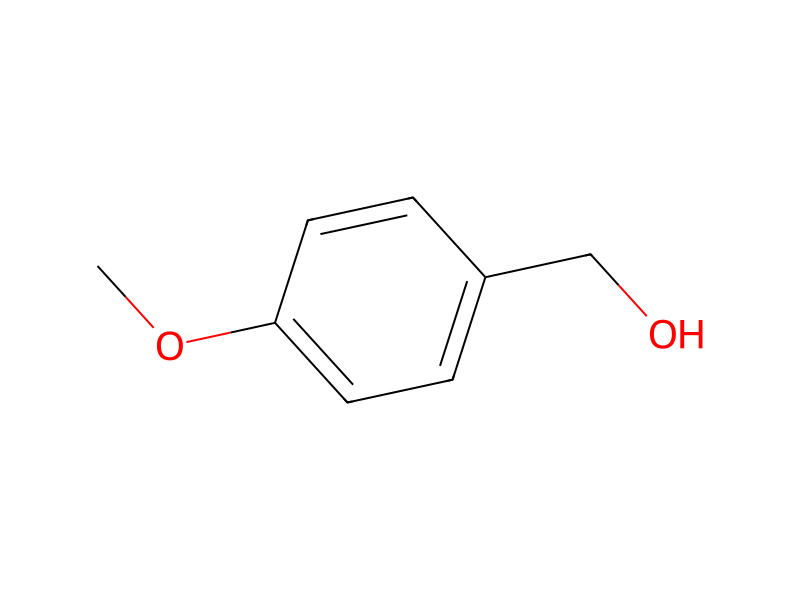



Produkt 1

Reagenzien, Katalysatoren, Lösungsmittel 1

Versuchsvorschrift
2,4-Dichloroquinoline (4.48 g, 25 mmol) was dissolved in dry THF (100 ml) and treated with sodium hydride (60% dispersion in oil, 5.62 g 25 mmol) under an argon atmosphere portion-wise over a period of 20 min. After a further 30 min the reaction mixture was treated with 15-crown-5 (5.62 g, 25 mmol) followed by 4-methoxybenzyl alcohol (3.44 g, 23 mmol). The reaction was stirred at room temperature overnight. The reaction mixture was then evaporated to low volume, and partitioned between water and ethyl acetate. The organic layer was washed with brine, dried (MgSO4) and evaporated. Chromatography on Kieselgel 60 eluting with 10% ethyl acetate in hexane afforded the title compound as a white solid (2.67 g, 39%); δH (CDCl3) 5.20 (2H, s), 6.83 (1H, s), 6.97 and 7.43 (4H, 2×d, J=8.6 Hz), 7.49 (1H, t, J=8.1 Hz), 7.70 (1H, t, J=8.2 Hz), 7.94 (1H, d, J=8.3 Hz), 8.17 (1H, d, J=8.2 Hz); MS (ES+) 300 (MH+, 10%). 121 (100).
Aufarbeitung
- customThe reaction mixture was then evaporated to low volume
- custompartitioned between water and ethyl acetate
- washThe organic layer was washed with brine
- dry with materialdried (MgSO4)
- customevaporated
Quellen und Nachweise
- ORD-Eintrag
- ord-361fc9a83b404743950446eea26116e0
- Quelldatensatz
- uspto-grants-2001_11
- Patentnummer
- US06320051B1
Notizen zur Reaktion
Wird geladen…