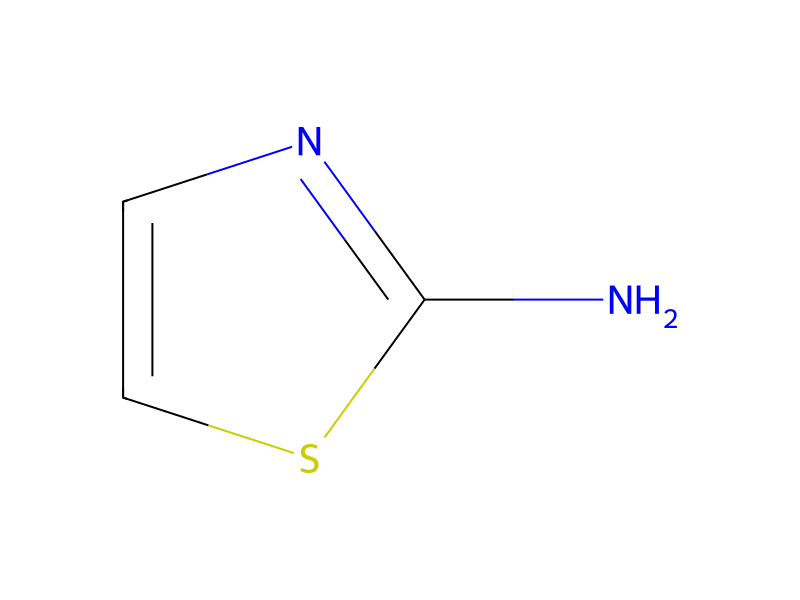
A solution of triphenylphosphine (116 mg, 0.44 mmol) in methylene chloride (2 mL) was cooled to 0° C. and then treated with N-bromosuccinimide (78 mg, 0.44 mmol). The reaction mixture was stirred at 0° C. for 30 min and then treated with a solution of 3-cycloheptyl-2-(4-methanesulfonyl-phenyl)-propionic acid (72 mg, 0.22 mmol) in methylene chloride (2 mL). The clear solution was stirred for 10 min at 0° C. and then allowed to warm to 25° C. where it was stirred for 1.5 h. The reaction mixture was then treated with 2-aminothiazole (66 mg, 0.66 mmol), and the resulting suspension was stirred for 20 h at 25° C. The reaction mixture was then concentrated in vacuo to remove methylene chloride, and the residue was diluted with ethyl acetate (30 mL) and a 1N aqueous hydrochloric acid solution (30 mL). The two layers were separated, and the aqueous layer was extracted with ethyl acetate (1×10 mL). The combined organic extracts were successively washed with a saturated aqueous sodium bicarbonate solution (1×20 mL) and a saturated aqueous sodium chloride solution (1×30 mL), dried over anhydrous magnesium sulfate, filtered, and concentrated in vacuo. Biotage chromatography (FLASH 40S, Silica, 4/1 to 1/1 hexanes/ethyl acetate) afforded 3-cycloheptyl-2-(4-methanesulfonyl-phenyl)-N-thiazol-2-yl-propionamide (68 mg, 76%) as an amorphous solid: EI-HRMS m/e calcd for C21H26N2O3S2 (M+) 406.1426, found 406.1424.