Urea → 1,3(2H,4H)-isoquinolinedione
Reaktionsgleichung

[C:1]([OH:13])(=O)[CH2:2][C:3]1[C:4](=[CH:8][CH:9]=[CH:10][CH:11]=1)[C:5](O)=[O:6].[NH2:14]C(N)=O>CO>[C:1]1(=[O:13])[NH:14][C:5](=[O:6])[C:4]2=[CH:8][CH:9]=[CH:10][CH:11]=[C:3]2[CH2:2]1Komponenten
4
Edukt 2
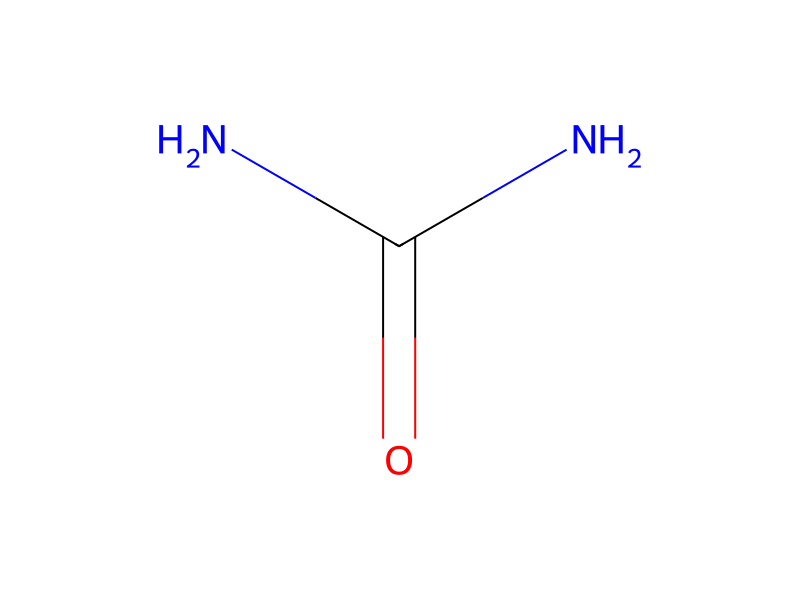

Produkt 1

Reagenzien, Katalysatoren, Lösungsmittel 1

Reaktionsbedingungen
- Temperatur
- 180 °C
Versuchsvorschrift
A mixture of homophthalic acid (200 g, 1.09 mol) and urea (80 g, 1.31 mol) was ground to a fine powder then heated at 175-185° C. until it had melted then resolidified. The mixture was cooled to ambient temperature, methanol (500 ml) was added, then the mixture was heated under reflux for 20 minutes, filtered, and allowed to cool to ambient temperature. The resulting solid was collected by filtration, washed with methanol and dried in vacuo to give homophthalimide (60 g, 34%) as a solid; m.pt. 235-240° C.; δH 4.0 (2H, s), 7.3-7.75 (3H, m), 8.10 (1H, d), 11.20 (1H, br s).
Aufarbeitung
- temperatureThe mixture was cooled to ambient temperature
- temperaturethe mixture was heated
- temperatureunder reflux for 20 minutes
- filtrationfiltered
- temperatureto cool to ambient temperature
- filtrationThe resulting solid was collected by filtration
- washwashed with methanol
- customdried in vacuo
Quellen und Nachweise
- ORD-Eintrag
- ord-08508139bc56446fa9125aeb8ce2c57e
- Quelldatensatz
- uspto-grants-2003_12
- Patentnummer
- US06664269B2
Notizen zur Reaktion
Wird geladen…