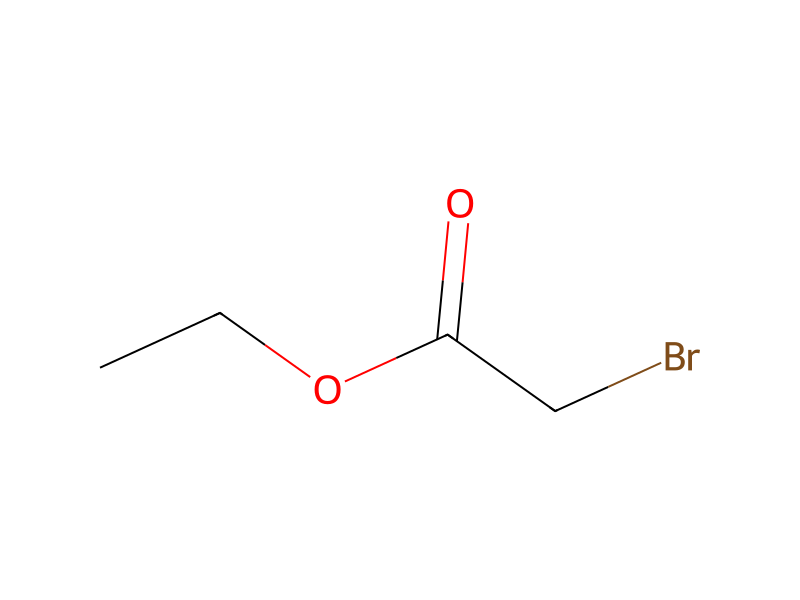
[N+:1]([C:4]1[CH:13]=[CH:12][CH:11]=[C:6]([C:7]([O:9][CH3:10])=[O:8])[C:5]=1[OH:14])([O-:3])=[O:2].Br[CH2:16][C:17]([O:19][CH2:20][CH3:21])=[O:18].C(=O)([O-])[O-:23].[K+].[K+].[Cl-].[Li+]>CN(C)C=O>[CH2:20]([O:19][C:17]([CH2:16][O:14][C:5]1([OH:23])[C:4]([N+:1]([O-:3])=[O:2])=[CH:13][CH:12]=[CH:11][CH:6]1[C:7]([O:9][CH3:10])=[O:8])=[O:18])[CH3:21]In a flask are placed 4.14 g (0.021 mole) of methyl 3-nitrosalicylate, 3.70 g (0.022 mole) of ethyl bromoacetate, 3.2 g (0.023 mole) of potassium carbonate, and 80 mL of N,N-dimethylformamide. The resulting mixture is heated at 90° C. for approximately 16 hours. At the conclusion of this period, the reaction mixture is cooled to room temperature, and 400 mL of a 10% aqueous solution of lithium chloride is added to the reaction mixture. The resulting mixture is extracted three times with ethyl acetate. The combined extracts are washed with 200 mL of the 10% aqueous solution of lithium chloride, dried over anhydrous magnesium sulfate, and filtered. The filtrate is concentrated under reduced pressure, leaving a residue which is then passed through a column of silica gel, eluting with ethyl acetate. The product-containing fractions are combined, and the solvent is evaporated under reduced pressure, leaving methyl 2-ethoxycarbonylmethoxy-3-nitrosalicylate as a residue.