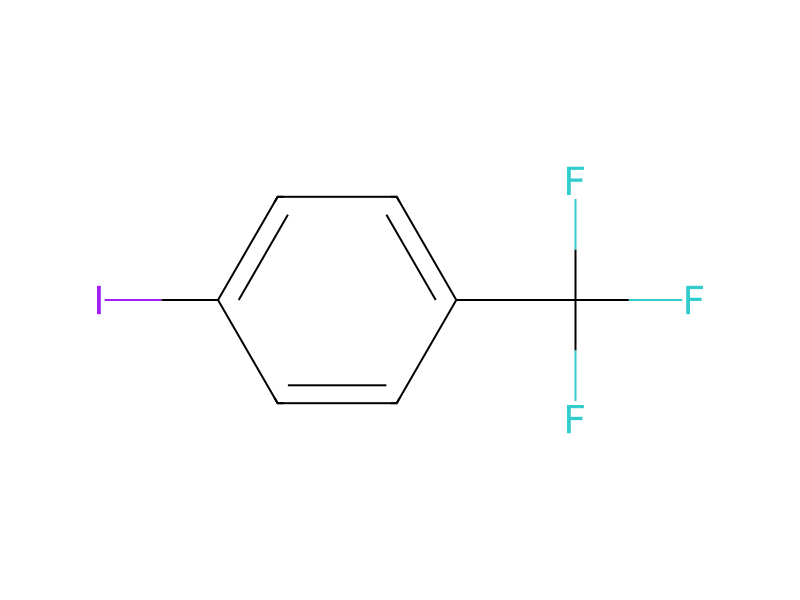
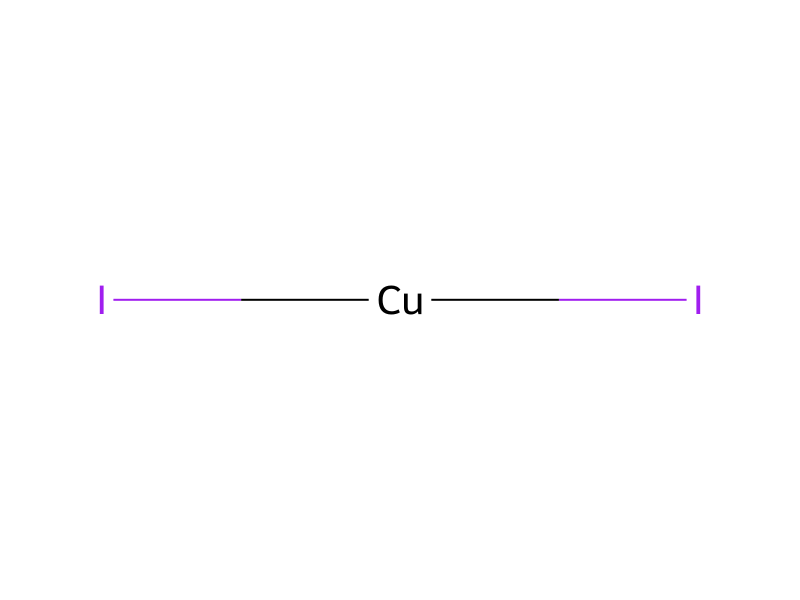
A solution of 3.2 grams (0.022 mole) of 2-amino-3-cyano-5-ethynylpyrazine, 8.4 grams (0.031 mole) of 4-trifluoromethylphenyl iodide, 10.7 grams (0.077 mole) of triethylamine, 0.5 gram (catalyst)of bis(triphenylphosphine)palladium(II) chloride, and 0.5 gram (catalyst) of copper iodide in 100 mL of acetonitrile is stirred at ambient temperature for about 18 hours. After this time the reaction mixture is concentrated under reduced pressure to a residue. The residue is partitioned between ethyl acetate and aqueous 1N hydrochloric acid. The two-layered mixture is filtered to remove a solid. The aqueous layer and the organic layer are separated, and the aqueous layer is washed with ethyl acetate. The ethyl acetate wash is combined with the organic layer, and the combination is washed with an aqueous solution of 10% lithium chloride. The organic layer is dried with magnesium sulfate and filtered. The filtrate is concentrated under reduced pressure to a residue. The residue is triturated with methylene chloride and filtered. The filtrate is subjected to column chromatography on silica gel. Elution is accomplished using methanol/methylene chloride combinations. The product-containing fractions are combined and concentrated under reduced pressure, yielding 2-amino-3-cyano-5-[(4-trifluoromethylphenyl)ethynyl]pyrazine.