StartseiteMCPWorkbenchSkills
StartseiteWorkbenchBenachrichtigungenMein Bereich
llms.txt · MCP-AnleitungDatenschutz · Nutzungsbedingungen · Supportv1.8.3
  1. Startseite
  2. /Reaktion

2-Methoxypropene → Methyl (S)-3-Boc-2,2-dimethyloxazolidine-4-propanoate

HRID 451836
Drucken

Reaktionsgleichung

Reaktionsgleichung von HRID 451836
[C:1]([O:5][C:6]([NH:8][C@H:9]([CH2:16][OH:17])[CH2:10][CH2:11][C:12]([O:14][CH3:15])=[O:13])=[O:7])([CH3:4])([CH3:3])[CH3:2].CO[C:20]([CH3:22])=[CH2:21]>CC(C)=O.B(F)(F)F.CCOCC>[CH3:15][O:14][C:12](=[O:13])[CH2:11][CH2:10][C@H:9]1[CH2:16][O:17][C:20]([CH3:22])([CH3:21])[N:8]1[C:6]([O:5][C:1]([CH3:2])([CH3:4])[CH3:3])=[O:7]
KomponentenVersuchsvorschriftAufarbeitungQuellen und NachweiseNotizen zur Reaktion

Komponenten

5

Edukt 2

HCID 83002-MethoxypropeneHCID 11107667(S)-methyl 4-(tert-butoxycarbonylamino)-5-hydroxypentanoate

Produkt 1

HCID 15930243Methyl (S)-3-Boc-2,2-dimethyloxazolidine-4-propanoateAusbeute 90 %

Reagenzien, Katalysatoren, Lösungsmittel 2

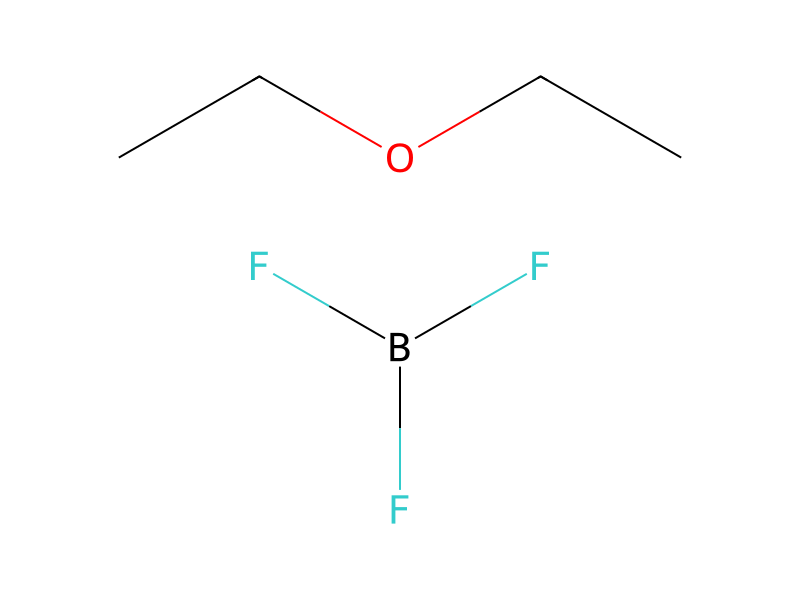
HCID 8000Boron trifluoride etherateKatalysatorHCID 180Acetone
Lösungsmittel

Versuchsvorschrift

(S)-Methyl 4-(tert-butoxycarbonylamino)-5-hydroxypentanoate (24 g, 97.2 mmol) and isopropenyl methyl ether (88.8 g, 854.6 mmol) was dissolved in acetone (2000 mL) and BF3.Et2O (0.82 mL, 5.84 mmol) was added at rt. The mixture was stirred for 1 hr at rt. The reaction was quenched by addition of Et3N (11.6 mL). The reaction solution was washed with aqueous saturated NaHCO3 (200 mL) and evaporated, and (S)-tert-butyl 4-(3-methoxy-3-oxopropyl)-2,2-dimethyloxazolidine-3-carboxylate (25.1 g, 90%) was obtained as an oil, which was used in the next step without further purification.

Aufarbeitung

  1. customThe reaction was quenched by addition of Et3N (11.6 mL)
  2. washThe reaction solution was washed with aqueous saturated NaHCO3 (200 mL)
  3. customevaporated

Quellen und Nachweise

ORD-Eintrag
ord-2fa55fbbd6c3447d977726cb64a12973
Quelldatensatz
uspto-grants-2013_07
DOI
10.6084/m9.figshare.5104873.v1
Patentnummer
US08487108B2

Notizen zur Reaktion

Auf dieser SeiteKomponentenVersuchsvorschriftAufarbeitungQuellen und NachweiseNotizen zur Reaktion