StartseiteMCPWorkbenchSkills
StartseiteWorkbenchBenachrichtigungenMein Bereich
llms.txt · MCP-AnleitungDatenschutz · Nutzungsbedingungen · Supportv1.8.3
  1. Startseite
  2. /Reaktion

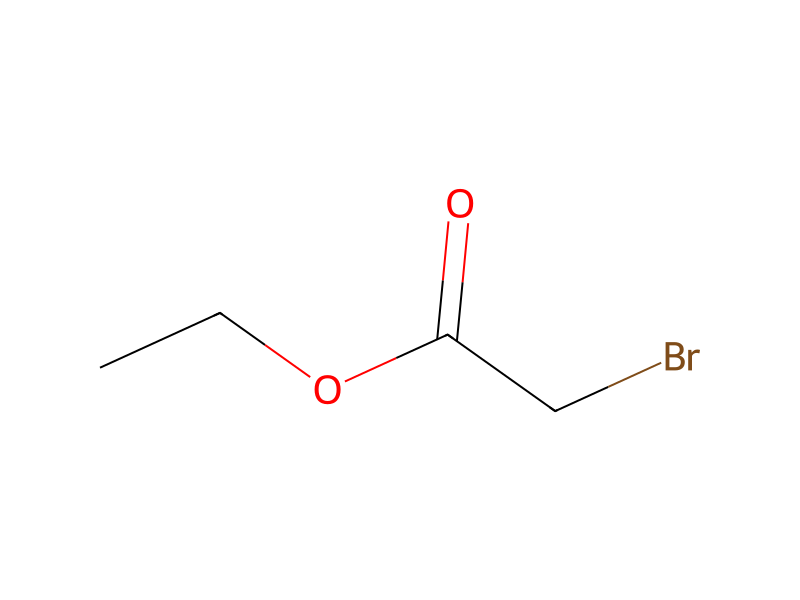
Ethyl bromoacetate → (2-(4-Bromo-2-fluoro-benzylcarbamoyl)-5-fluoro-4-methyl-phenoxy]-acetic acid ethyl ester

HRID 457972
Drucken

Reaktionsgleichung

Reaktionsgleichung von HRID 457972
[Br:1][C:2]1[CH:20]=[CH:19][C:5]([CH2:6][NH:7][C:8](=[O:18])[C:9]2[CH:14]=[C:13]([CH3:15])[C:12]([F:16])=[CH:11][C:10]=2[OH:17])=[C:4]([F:21])[CH:3]=1.C([O-])([O-])=O.[K+].[K+].[CH2:28]([O:30][C:31](=[O:34])[CH2:32]Br)[CH3:29]>CC(C)=O>[CH2:28]([O:30][C:31](=[O:34])[CH2:32][O:17][C:10]1[CH:11]=[C:12]([F:16])[C:13]([CH3:15])=[CH:14][C:9]=1[C:8](=[O:18])[NH:7][CH2:6][C:5]1[CH:19]=[CH:20][C:2]([Br:1])=[CH:3][C:4]=1[F:21])[CH3:29]
KomponentenReaktionsbedingungenVersuchsvorschriftAufarbeitungQuellen und NachweiseNotizen zur Reaktion

Komponenten

5

Edukt 3

HCID 7748Ethyl bromoacetateHCID 11430Potassium CarbonateHCID 18468169N-(4-bromo-2-fluoro-benzyl)-4-fluoro-2-hydroxy-5-methyl-benzamide

Produkt 1

HCID 22093479(2-(4-Bromo-2-fluoro-benzylcarbamoyl)-5-fluoro-4-methyl-phenoxy]-acetic acid ethyl esterAusbeute 93 %

Reagenzien, Katalysatoren, Lösungsmittel 1

HCID 180
Acetone
Lösungsmittel
2×

Reaktionsbedingungen

Temperatur
50 °C

Versuchsvorschrift

A stirring solution of N-(4-bromo-2-fluoro-benzyl)-4-fluoro-2-hydroxy-5-methyl-benzamide (1.69 g, 4.76 mmol) in acetone (24 mL, 0.2 M) was treated with an aq K2CO3 solution (3.6 mL, 2 M, 7.12 mmol) and ethylbromoacetate (0.63 mL, 5.69 mmol) in acetone (24 mL, 0.2 M) and heated to 50° C. for 2.5 h. After cooling to room temperature, the solution was concentrated, acidified to pH 1 with 2 N HCl, and diluted with ethyl acetate (100 mL) and washed with 50 mL of saturated aq NaCl. The organic layer was dried over Na2SO4, filtered, and concentrated to provide [2-(4-bromo-2-fluoro-benzylcarbamoyl)-5-fluoro-4-methyl-phenoxy]-acetic acid ethyl ester (1.95, 93%) as a white solid: mp 128–129° C.; Rf 0.42 (30% ethyl acetate in heptane); 1H NMR (CDCl3, 300 MHz) δ 8.79 (bd t, J=4.5 Hz, 1 H), 8.10 (d, J=9.0 Hz, 1 H), 7.34 (t, J=8.3 Hz, 1 H), 7.26–7.23 (m, 1 H), 7.21 (t, J=2.3 Hz, 1 H), 6.53 (d, J=10.5 Hz, 1 H), 4.66 (d, J=3.9 Hz, 1 H), 4.65 (s, 2 H), 4.28 (q, J=7.2 Hz, 2 H), 2.23 (bd d, J=1.5 Hz, 3 H), 1.30 (t, J=7.2 Hz, 3H); Anal. calcd for C19H18BrFNO4: C, 51.60; H, 4.10; N, 3.17. Found C, 51.65; H, 4.19; N, 3.10.

Aufarbeitung

  1. temperatureAfter cooling to room temperature
  2. concentrationthe solution was concentrated
  3. additiondiluted with ethyl acetate (100 mL)
  4. washwashed with 50 mL of saturated aq NaCl
  5. dry with materialThe organic layer was dried over Na2SO4
  6. filtrationfiltered
  7. concentrationconcentrated

Quellen und Nachweise

ORD-Eintrag
ord-738833e73aea4edb8f51c006c3cd24f4
Quelldatensatz
uspto-grants-2007_03
DOI
10.6084/m9.figshare.5104873.v1
Patentnummer
US07189749B2

Notizen zur Reaktion

Auf dieser SeiteKomponentenReaktionsbedingungenVersuchsvorschriftAufarbeitungQuellen und NachweiseNotizen zur Reaktion