Methyl chloroformate → HCID 13491755, Verbindung
HRID 463948
Reaktionsgleichung

[CH3:1][NH:2][C:3]1[CH:7]=[C:6]([C:8]([CH3:11])([CH3:10])[CH3:9])[NH:5][N:4]=1.Cl[C:13]([O:15][CH3:16])=[O:14]>O1CCOCC1>[C:8]([C:6]1[NH:5][N:4]=[C:3]([N:2]([CH3:1])[C:13](=[O:14])[O:15][CH3:16])[CH:7]=1)([CH3:11])([CH3:9])[CH3:10]Komponenten
4
Edukt 2
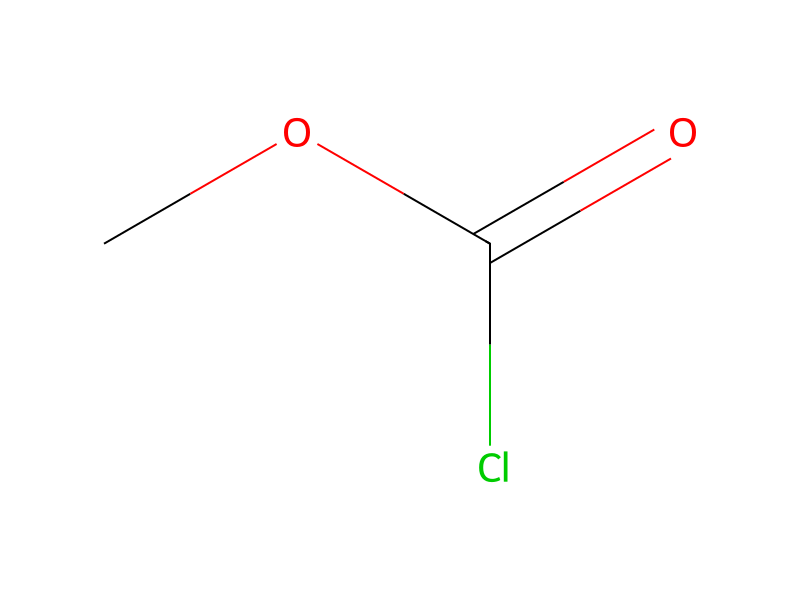

Produkt 1

Reagenzien, Katalysatoren, Lösungsmittel 1

Versuchsvorschrift
15.5 g of 3-(N-methylamino)-5-t-butylpyrazole as prepared in Reference Example was dissolved in 50 ml of dioxane, and 11.3 g of methyl chloroformate was added to the solution. The mixture was then allowed to react at 100° C. for 5 hours. After the reaction was completed, the solvent was distilled off and the residue was dissolved in an alcohol. The solution was added in 200 ml of a 5% aqueous solution of sodium hydroxide and the mixture was stirred at room temperature for 30 minutes. After neutralization, the mixture was extracted with methylene chloride, and the methylene chloride layer was dried over anhydrous sodium sulfate, followed by distilling off the methylene chloride. The residue was recrystallized from a mixture of toluene and hexane, whereby 4 g of methyl N-(5-t-butyl-3-pyrazolyl)-N-methylcarbamate was obtained.