Sulfur Dioxide → 3-(4,8-Dimethylnona-3,7-dien-1-yl)-2,5-dihydro-1H-1lambda~6~-thiophene-1,1-dione
HRID 464050
Reaktionsgleichung

[CH3:1][CH2:2][C:3]([CH2:5][CH2:6]/[CH:7]=[C:8](/[CH2:10][CH2:11][CH:12]=[C:13]([CH3:15])[CH3:14])\[CH3:9])=[CH2:4].[S:16](=[O:18])=[O:17]>>[CH3:9][C:8]([CH2:10][CH2:11][CH:12]=[C:13]([CH3:14])[CH3:15])=[CH:7][CH2:6][CH2:5][C:3]1[CH2:4][S:16]([CH2:1][CH:2]=1)(=[O:18])=[O:17]Komponenten
3
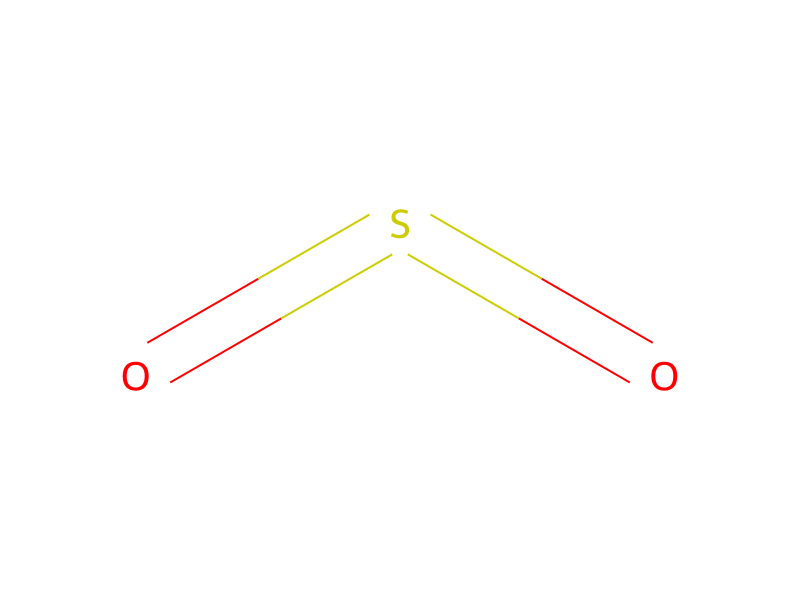


Versuchsvorschrift
The (E)-β-farnesene containing product of Example 1 (17 g) and liquid sulphur dioxide are sealed in a glass ampoule and stored at ambient temperature for 18 hours. The ampoule is opened after cooling and the excess SO2 is allowed to evaporate. The residue is then chromatographed on Florisil using sequentially hexane, an ether/hexane mixture of increasing concentration in ether, and finally ether, the effluent being monitored by n.m.r. Removal of the solvent under vacuum from the appropriate fractions gives 3-(4,8-dimethyl-3,7-nonadienyl) sulpholene (II) as a straw coloured liquid (9 g, 58%); nD20 1.5080; M+ (m/z as % of base peak): 268 (0.02); δ(CCl4) 1.70 (m, 9H), 2.08 (m, 8H), 3.70 (m, 4H), 5.16 (m, 2H), 5.78 (br, t, 1H). Note: On heating at 180° C. under a vacuum of 1τ the sulpholene regenerates an (E)- and (Z)-β-farnesene mixture in high yield.