Reaktionsgleichung
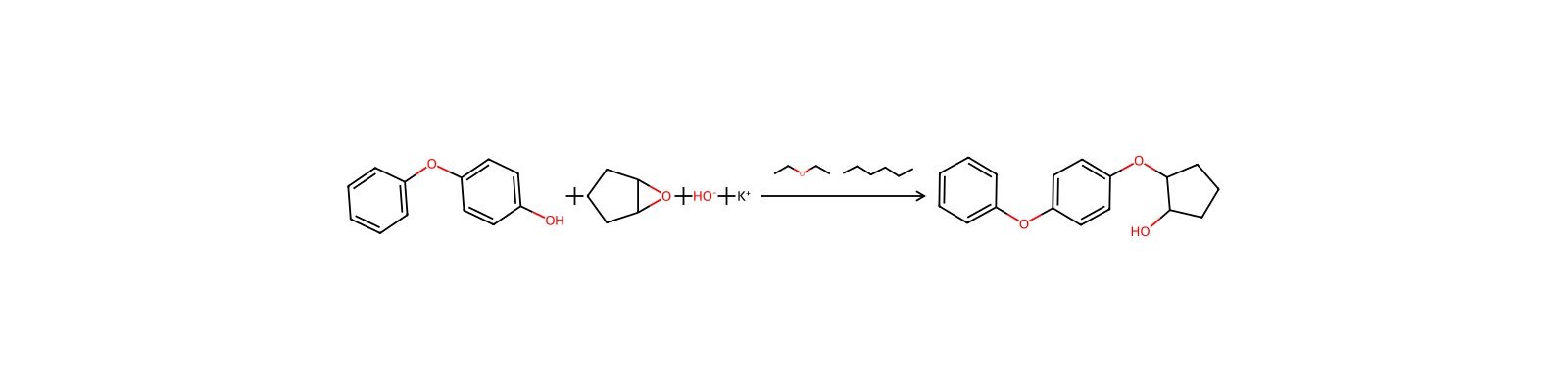
[CH:1]1[CH:6]=[CH:5][C:4]([O:7][C:8]2[CH:13]=[CH:12][C:11]([OH:14])=[CH:10][CH:9]=2)=[CH:3][CH:2]=1.[O:15]1[CH:17]2[CH2:18][CH2:19][CH2:20][CH:16]12.[OH-].[K+]>CCOCC.CCCCCC>[O:7]([C:8]1[CH:13]=[CH:12][C:11]([O:14][CH:17]2[CH2:18][CH2:19][CH2:20][CH:16]2[OH:15])=[CH:10][CH:9]=1)[C:4]1[CH:3]=[CH:2][CH:1]=[CH:6][CH:5]=1Komponenten
Edukt 3



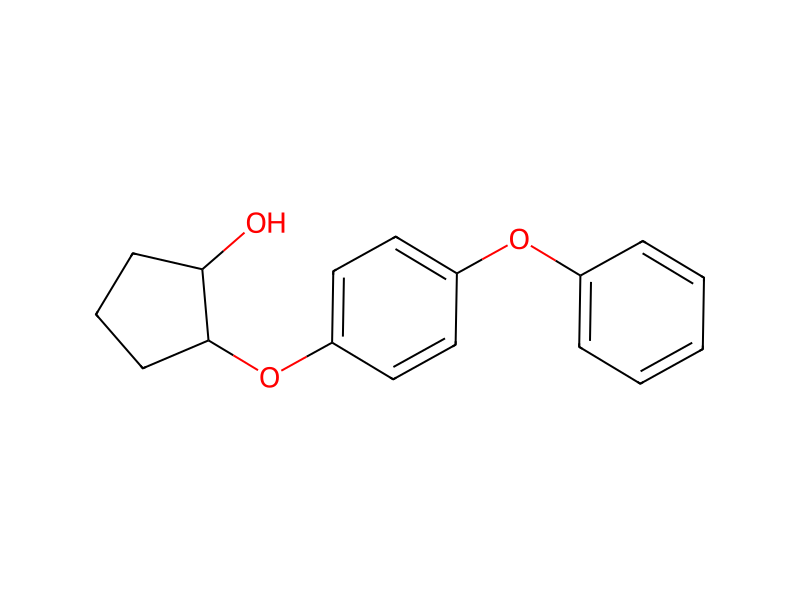
Produkt 1
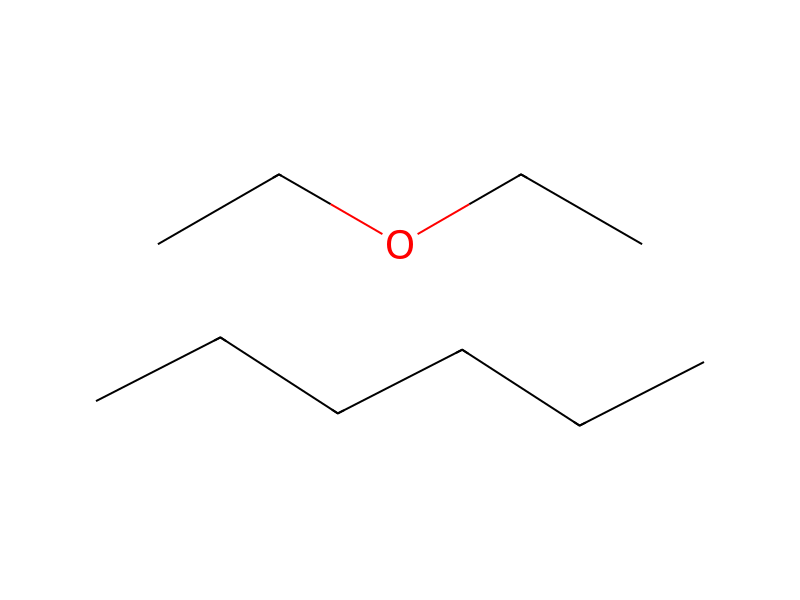
Reagenzien, Katalysatoren, Lösungsmittel 1
Reaktionsbedingungen
- Temperatur
- 150 °C
Versuchsvorschrift
A mixture of 52 g of 4-hydroxydiphenyl ether and 23.5 g of 1,2-epoxycyclopentane is heated to 150° C. To this melt are added in the course of 25 minutes 6.7 g of 90% potassium hydroxide powder and the mixture is stirred for one hour at 130° C. After cooling, the reaction mixture is taken up in ether/hexane (1:1) and the organic solution is washed 4 times with 10% potassium hydroxide solution and 3 times with saturated sodium chloride solution. The organic phase is dried over sodium sulphate and concentrated by rotary evaporation under reduced pressure. Distillation of the crude product yields 2-(4-phenoxyphenoxy)-cyclopentan-1-ol as a colourless oil with a boiling point of 181°-185° C./0.001 torr and a refractive index of nD20 =1.5812.
Aufarbeitung
- temperatureAfter cooling
- washthe organic solution is washed 4 times with 10% potassium hydroxide solution and 3 times with saturated sodium chloride solution
- dry with materialThe organic phase is dried over sodium sulphate
- concentrationconcentrated by rotary evaporation under reduced pressure
- distillationDistillation of the crude product
Quellen und Nachweise
- ORD-Eintrag
- ord-2e693e4050cb4b24ade852d15d1dcfb6
- Quelldatensatz
- uspto-grants-1979_11
- Patentnummer
- US04175137
Verknüpfte Notizen
Wird geladen…