StartseiteMCPSkillsWorkbenchOpenChem
StartseiteWorkbenchBenachrichtigungenMein Bereich
llms.txt · skill.md · MCP-AnleitungDatenschutz · Nutzungsbedingungen · Supportv1.8.4
  1. Startseite
  2. /Reaktion

Sodium Carbonate → N-[(4,6-Dimethyl-2-oxo-1,2-dihydro-3-pyridinyl)methyl]-6-(4-fluorophenyl)-1-(1-methylethyl)-1H-pyrazolo[3,4-b]pyridine-4-carboxamide

HRID 475985
Drucken

Reaktionsgleichung

Cl[C:2]1[CH:3]=[C:4]([C:14]([NH:16][CH2:17][C:18]2[C:19](=[O:26])[NH:20][C:21]([CH3:25])=[CH:22][C:23]=2[CH3:24])=[O:15])[C:5]2[CH:10]=[N:9][N:8]([CH:11]([CH3:13])[CH3:12])[C:6]=2[N:7]=1.[F:27][C:28]1[CH:33]=[CH:32][C:31](B(O)O)=[CH:30][CH:29]=1.C(=O)([O-])[O-].[Na+].[Na+].B(O)O>O1CCOCC1.C1C=CC(P(C2C=CC=CC=2)[C-]2C=CC=C2)=CC=1.C1C=CC(P(C2C=CC=CC=2)[C-]2C=CC=C2)=CC=1.Cl[Pd]Cl.[Fe+2].C(Cl)Cl>[CH3:24][C:23]1[CH:22]=[C:21]([CH3:25])[NH:20][C:19](=[O:26])[C:18]=1[CH2:17][NH:16][C:14]([C:4]1[C:5]2[CH:10]=[N:9][N:8]([CH:11]([CH3:13])[CH3:12])[C:6]=2[N:7]=[C:2]([C:31]2[CH:32]=[CH:33][C:28]([F:27])=[CH:29][CH:30]=2)[CH:3]=1)=[O:15]

KomponentenReaktionsbedingungenVersuchsvorschriftAufarbeitungQuellen und NachweiseNotizen zur Reaktion

Komponenten

7

Edukt 4

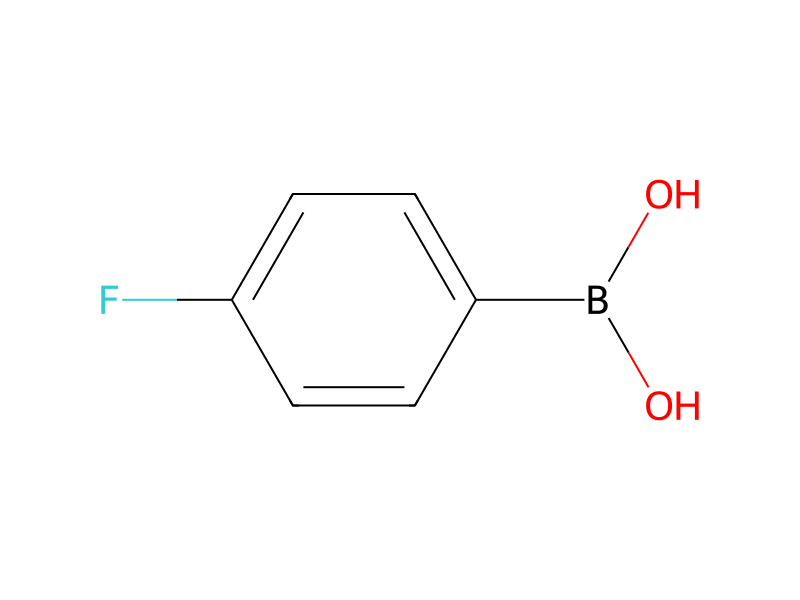
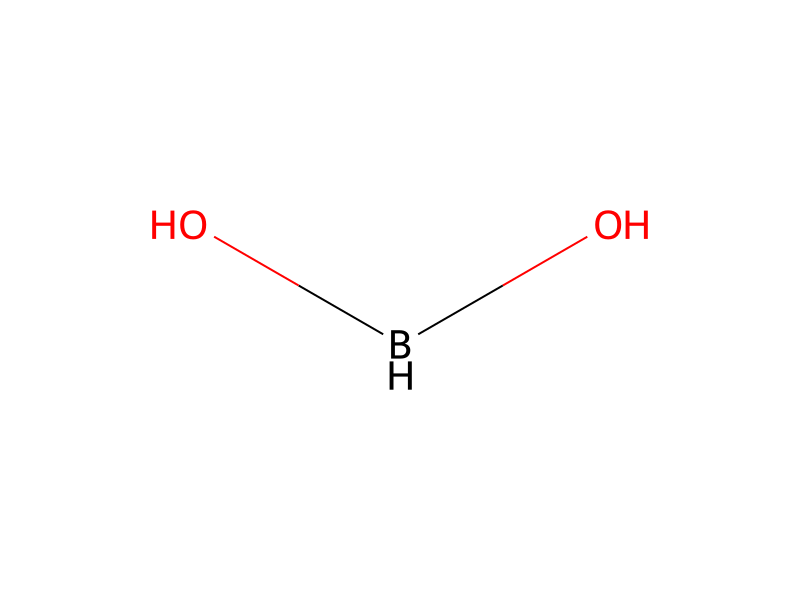
HCID 10340Sodium CarbonateHCID 61668Boronic AcidHCID 2856454-Fluorophenylboronic acidHCID 565974256-Chloro-N-[(4,6-dimethyl-2-oxo-1,2-dihydro-3-pyridinyl)methyl]-1-(1-methylethyl)-1H-pyrazolo[3,4-b]pyridine-4-carboxamide

Produkt 1

HCID 56598003
N-[(4,6-Dimethyl-2-oxo-1,2-dihydro-3-pyridinyl)methyl]-6-(4-fluorophenyl)-1-(1-methylethyl)-1H-pyrazolo[3,4-b]pyridine-4-carboxamide
Ausbeute 12,5 %

Reagenzien, Katalysatoren, Lösungsmittel 2

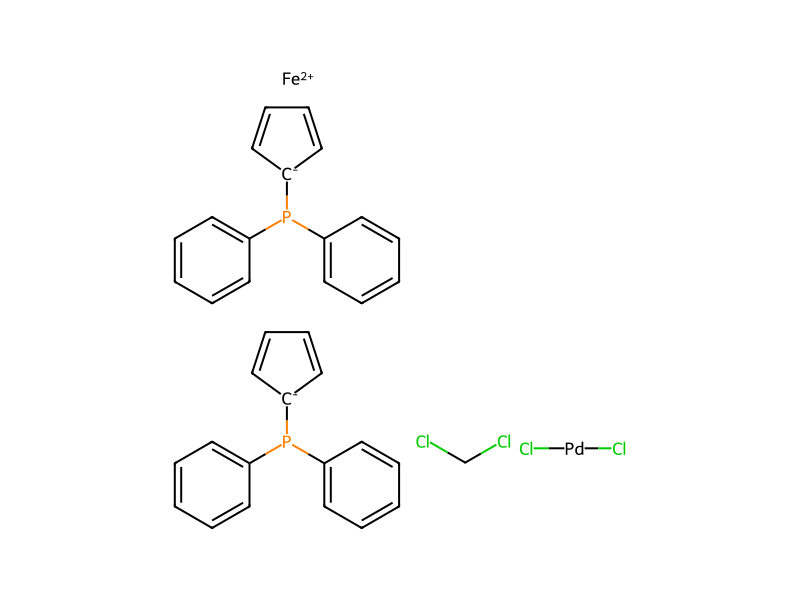
HCID 178418807HCID 178418807, VerbindungKatalysator2×HCID 312751,4-DioxaneLösungsmittel

Reaktionsbedingungen

Temperatur
85 °C

Versuchsvorschrift

In a 25 mL sealable tube under nitrogen were combined 6-chloro-N-[(4,6-dimethyl-2-oxo-1,2-dihydro-3-pyridinyl)methyl]-1-(1-methylethyl)-1H-pyrazolo[3,4-b]pyridine-4-carboxamide (90 mg, 0.24 mmol), (4-fluorophenyl)boronic acid (33.7 mg, 0.24 mmol) in 1,4-dioxane (3 mL). PdCl2(dppf)-CH2Cl2 adduct (19.7 mg, 0.024 mmol) was added and the resulting mixture was degassed with nitrogen for 10 min. Sodium carbonate (77 mg, 0.72 mmol) was added, the vessel was sealed, and the mixture was heated at 85° C. for 2 hrs and then at 100° C. overnight. Added an additional 2 eq of boronic acid and 0.2 eq of PdCl2(dppf)-CH2Cl2 adduct. The contents were heated at 120° C. for 4 hr. and then irradiated (microwave) first at 160° C. for 90 min, and then at 190° C. for 2 hrs. After cooling to room temperature, the solids were filtered, washed with DMSO and the filtrate was evaporated. The crude product was purified first by reverse-phase HPLC (C18, 5% to 80% CH3CN in water with 0.1% TFA, 18 minute gradient) and then silica gel chromatography (eluent: gradient 0 to 90:10:1 DCM/MeOH/NH4OH). The collected solid was dried to afford the title compound (13 mg, 12%) as a white solid. LCMS E-S (M+H)=434.2. 1H NMR (400 MHz, DMSO-d6) δ ppm 11.58 (br. s., 1H), 8.96 (t, J=4.67 Hz, 1H), 8.38 (s, 1H), 8.33 (dd, J=8.84, 5.56 Hz, 2H), 8.16 (s, 1H), 7.40 (t, J=8.84 Hz, 2H), 5.91 (s, 1H), 5.33 (dt, J=13.26, 6.76 Hz, 1H), 4.41 (d, J=4.55 Hz, 2H), 2.23 (s, 3H), 2.13 (s, 3H), 1.55 (d, J=6.57 Hz, 6H).

Aufarbeitung

  1. customIn a 25 mL sealable tube under nitrogen were combined
  2. customthe resulting mixture was degassed with nitrogen for 10 min
  3. customthe vessel was sealed
  4. customat 100° C.
  5. customovernight
  6. temperatureThe contents were heated at 120° C. for 4 hr
  7. customand then irradiated (microwave) first at 160° C. for 90 min
  8. temperatureAfter cooling to room temperature
  9. filtrationthe solids were filtered
  10. washwashed with DMSO
  11. customthe filtrate was evaporated
  12. customThe crude product was purified first by reverse-phase HPLC (C18, 5% to 80% CH3CN in water with 0.1% TFA, 18 minute gradient)
  13. customThe collected solid was dried

Quellen und Nachweise

ORD-Eintrag
ord-279d25fa1d1943eab1da47352d1f01fa
Quelldatensatz
uspto-grants-2014_01
DOI
10.6084/m9.figshare.5104873.v1
Patentnummer
US08637509B2

Notizen zur Reaktion

Auf dieser SeiteKomponentenReaktionsbedingungenVersuchsvorschriftAufarbeitungQuellen und NachweiseNotizen zur Reaktion