Thionyl Chloride → 2-(4-Amino-2-methylphenyl)-1,3-propanediol sulphite
HRID 484635
Reaktionsgleichung
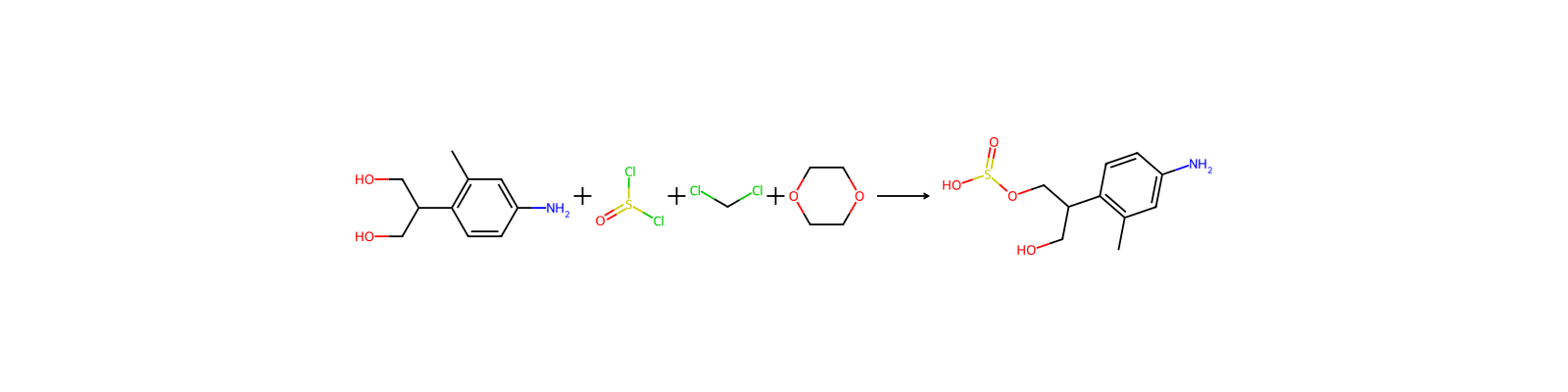
[NH2:1][C:2]1[CH:7]=[CH:6][C:5]([CH:8]([CH2:11][OH:12])[CH2:9][OH:10])=[C:4]([CH3:13])[CH:3]=1.[S:14](Cl)(Cl)=[O:15].ClCCl.[O:21]1CCOCC1>>[S:14]([O:10][CH2:9][CH:8]([C:5]1[CH:6]=[CH:7][C:2]([NH2:1])=[CH:3][C:4]=1[CH3:13])[CH2:11][OH:12])([OH:15])=[O:21]Komponenten
4



Versuchsvorschrift
(c') 2-(4-Amino-2-methylphenyl)-1,3-propanediol (0.8 g; 4.4 mmol) was taken up in dichloromethane/dioxane (1/1; 20 ml), and thionylchloride (1.6 g; 13.2 mmol) was added over 30 minutes, at room temperature. The solution was heated under reflux with stirring for an additional hour. The solvent was evaporated, the residue was neutralized with a NaHCO3 solution in water and the aqueous solution was thoroughly extracted with dichloromethane. The organic layers were dried over MgSO4 and evaporated to dryness. The remaining oil (0.9 g) consisted of 2-(4-amino-2-methylphenyl)-1,3-propanediol sulphite (yield 90%, purity >90%).