StartseiteMCPWorkbenchSkills
StartseiteWorkbenchBenachrichtigungenMein Bereich
llms.txt · MCP-AnleitungDatenschutz · Nutzungsbedingungen · Supportv1.8.0
  1. Startseite
  2. /Reaktion

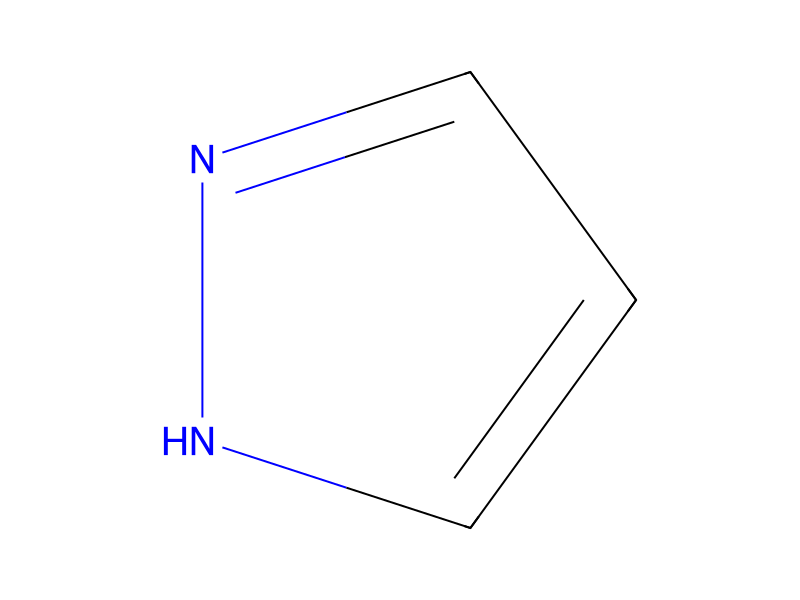
Pyrazole → 2,3-Dihydro-4-methyl-2-[2-(1H-pyrazol-1-yl)ethyl]pyrido[3,2-f][1,4]oxazepine-5(4H)-thione

HRID 4847
Notizen
Druckvorschau

Reaktionsgleichung

Reaktionsgleichung von HRID 4847
[H-].[Na+].[NH:3]1[CH:7]=[CH:6][CH:5]=[N:4]1.[H][H].Cl[CH2:11][CH2:12][CH:13]1[CH2:19][N:18]([CH3:20])[C:17](=[S:21])[C:16]2[CH:22]=[CH:23][CH:24]=[N:25][C:15]=2[O:14]1>CN(C)C=O>[CH3:20][N:18]1[C:17](=[S:21])[C:16]2[CH:22]=[CH:23][CH:24]=[N:25][C:15]=2[O:14][CH:13]([CH2:12][CH2:11][N:3]2[CH:7]=[CH:6][CH:5]=[N:4]2)[CH2:19]1
KomponentenVersuchsvorschriftAufarbeitungQuellen und NachweiseNotizen zur Reaktion

Komponenten

6

Edukt 4

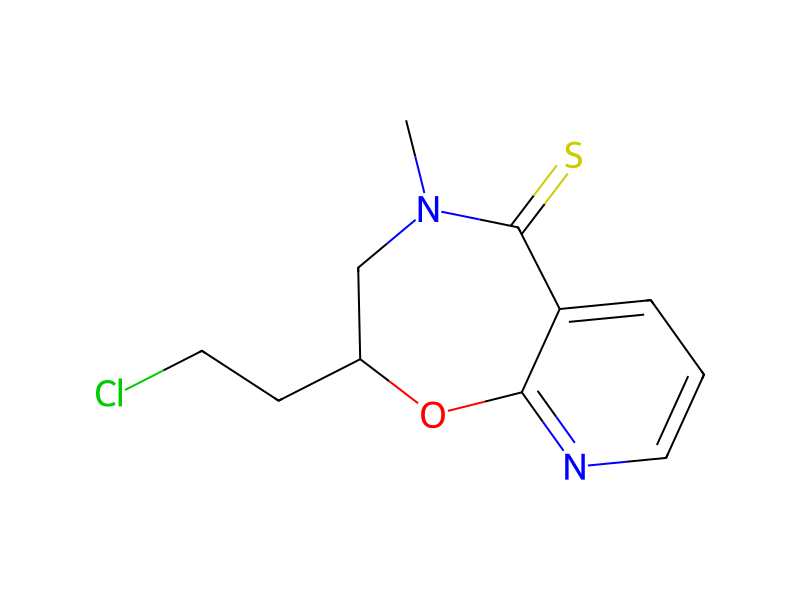
HCID 1048PyrazoleHCID 24758Sodium hydrideHCID 137264422-(chloroethyl)-2,3-dihydro-4-methylpyrido[3,2-f]-1,4-oxazepine-5(4H)thioneHCID 178418361HCID 178418361, Verbindung

Produkt 1

HCID 137265182,3-Dihydro-4-methyl-2-[2-(1H-pyrazol-1-yl)ethyl]pyrido[3,2-f][1,4]oxazepine-5(4H)-thione

Reagenzien, Katalysatoren, Lösungsmittel 1

HCID 6228
Dimethylformamide
Lösungsmittel
3×

Versuchsvorschrift

To a suspension of 2.16 g (0.054 mole) of sodium hydride in 20 ml of dimethylformamide was added dropwise a solution of 2.92 g (0.043 mole) of pyrazole in 10 ml of dimethylformamide. There was a slight exotherm at this point with some evolution of hydrogen gas. The resulting solution was then added dropwise to a solution of 10.0 g (0.039 mole) of 2-(2-chloroethyl)-2,3-dihydro-4-methylpyrido[3,2-f]-1,4-oxazepine-5(4H)-thione in 30 ml of dimethylformamide. The reaction flask was sealed and stirred overnight at room temperature.

Aufarbeitung

  1. customThe reaction flask was sealed

Quellen und Nachweise

ORD-Eintrag
ord-6d86f383aca44f438845b19594bf30af
Quelldatensatz
uspto-grants-1988_02
DOI
10.6084/m9.figshare.5104873.v1
Patentnummer
US04727152

Notizen zur Reaktion

Wird geladen…

Auf dieser SeiteKomponentenVersuchsvorschriftAufarbeitungQuellen und NachweiseNotizen zur Reaktion