Reaktionsgleichung
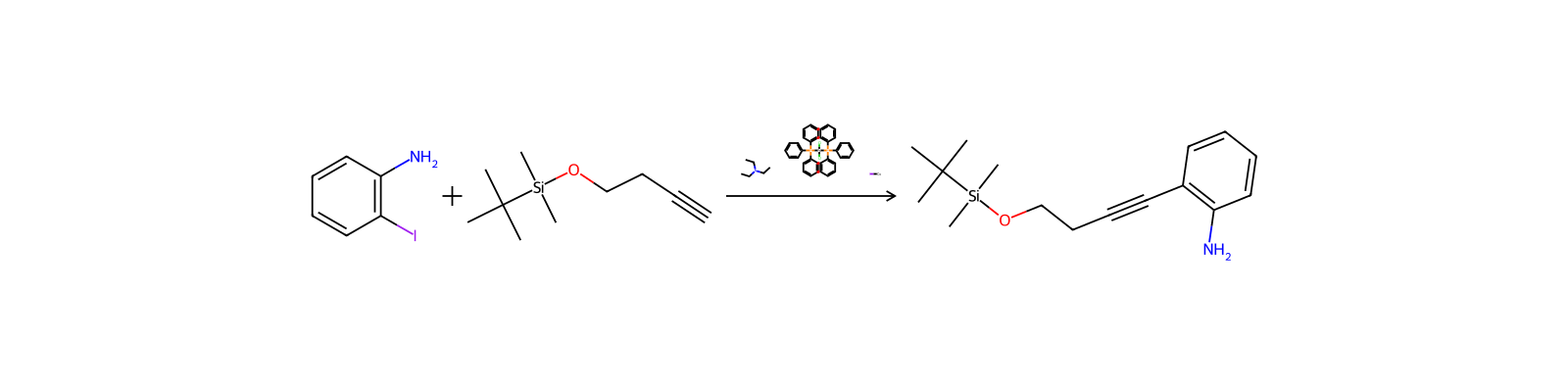
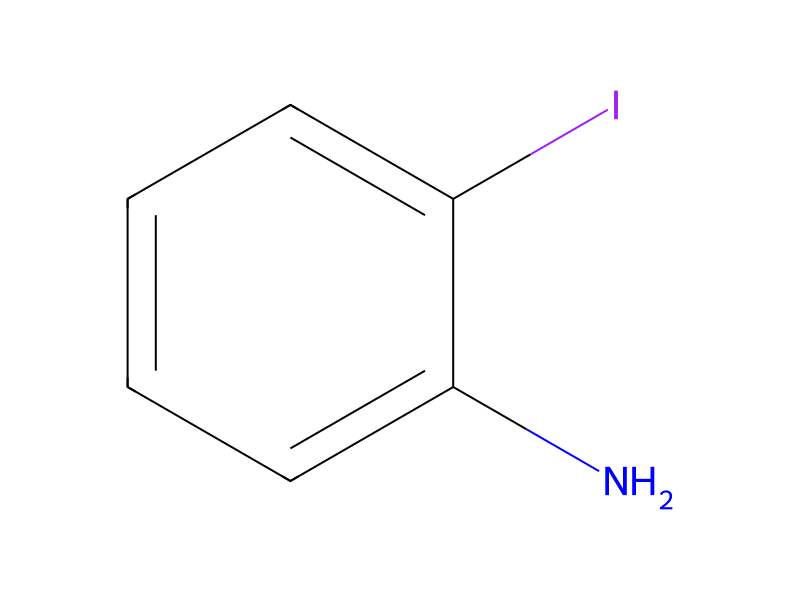
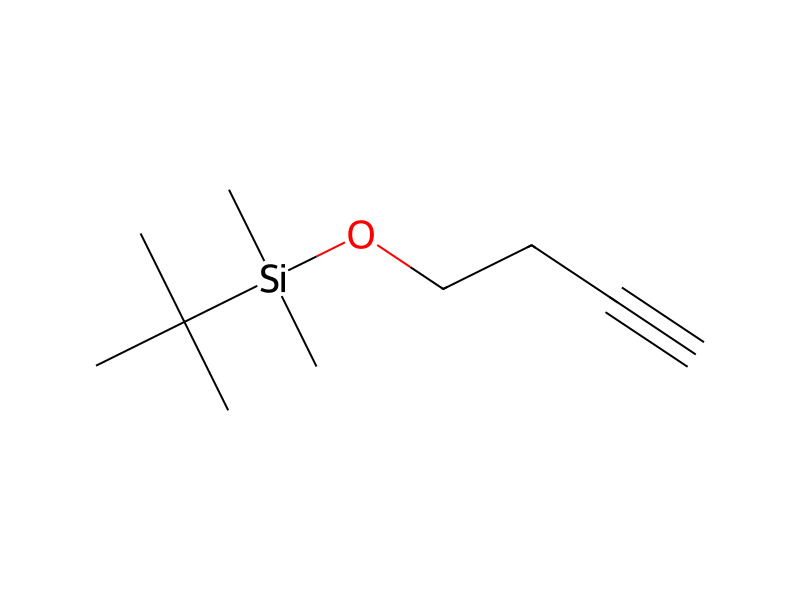
I[C:2]1[CH:8]=[CH:7][CH:6]=[CH:5][C:3]=1[NH2:4].[C:9]([Si:13]([O:16][CH2:17][CH2:18][C:19]#[CH:20])([CH3:15])[CH3:14])([CH3:12])([CH3:11])[CH3:10]>C(N(CC)CC)C.Cl[Pd](Cl)([P](C1C=CC=CC=1)(C1C=CC=CC=1)C1C=CC=CC=1)[P](C1C=CC=CC=1)(C1C=CC=CC=1)C1C=CC=CC=1.[Cu]I>[Si:13]([O:16][CH2:17][CH2:18][C:19]#[C:20][C:2]1[CH:8]=[CH:7][CH:6]=[CH:5][C:3]=1[NH2:4])([C:9]([CH3:10])([CH3:11])[CH3:12])([CH3:15])[CH3:14]Komponenten
6
Edukt 2
Produkt 1

Reagenzien, Katalysatoren, Lösungsmittel 3



Versuchsvorschrift
2-Iodoaniline (1.76 g, 8 mmol) was dissolved in triethylamine (50 mL) and placed under N2. tert-Butylbut-3-ynyloxydimethylsilane (2.58 g, 14 mmol) was added, followed by bis(triphenylphosphine)palladium(II) chloride (30 mg, 0.042 mmol) and copper(I) iodide (7 mg, 0.036 mmol), and the reaction was stirred overnight at room temperature. Triethylamine was evaporated, and the residue was diluted with ether and filtered through Celite. The filtrate was concentrated, and the residue was purified by SiO2 chromatography (5-20% ethyl acetate/hexanes) to give the desired product. The reaction was assumed to be quantitative.
Aufarbeitung
- customTriethylamine was evaporated
- additionthe residue was diluted with ether
- filtrationfiltered through Celite
- concentrationThe filtrate was concentrated
- customthe residue was purified by SiO2 chromatography (5-20% ethyl acetate/hexanes)
Quellen und Nachweise
- ORD-Eintrag
- ord-3c47387b6f994676a8996f74a6e2aa36
- Quelldatensatz
- uspto-grants-2009_05
- Patentnummer
- US07528262B2
Verknüpfte Notizen
Wird geladen…