Reaktionsgleichung

[C:1](Cl)(=[O:4])[CH:2]=[CH2:3].[CH2:6]([O:8][C:9](=[O:17])[C:10]1[CH:15]=[CH:14][C:13]([NH2:16])=[CH:12][CH:11]=1)[CH3:7].C(N(CC)CC)C>ClCCl>[CH2:6]([O:8][C:9](=[O:17])[C:10]1[CH:15]=[CH:14][C:13]([NH:16][C:1](=[O:4])[CH:2]=[CH2:3])=[CH:12][CH:11]=1)[CH3:7]Komponenten
5
Edukt 3


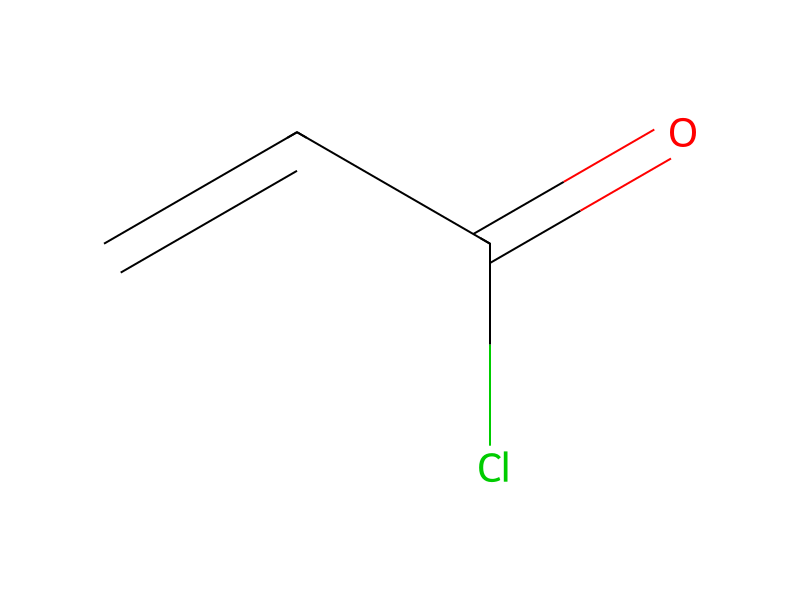
Produkt 1

Reagenzien, Katalysatoren, Lösungsmittel 1

Versuchsvorschrift
To a solution of acryloyl chloride (1.08 mL, 13.32 mmol) in dry dichloromethane (10 mL) was slowly added dropwise, via addition funnel, a solution of 4-aminobenzoic acid ethyl ester (2.0 g, 12.11 mmol) and triethylamine (1.86 mL, 13.32 mmol) in dry dichloromethane (5 mL) over about 30 minutes. The reaction was stirred at room temperature for 16 hours. The solution was then partitioned between dichloromethane and water in a separatory funnel. The organic layer was washed with 2 N HCl, dried with sodium sulfate, and concentrated in vacuo to dryness. The resulting residue was triturated with hexane, and vacuum filtered to yield 2.02 g (76%) of 4-acryloylaminobenzoic acid ethyl ester as a solid.
Aufarbeitung
- customThe solution was then partitioned between dichloromethane and water in a separatory funnel
- washThe organic layer was washed with 2 N HCl
- dry with materialdried with sodium sulfate
- concentrationconcentrated in vacuo to dryness
- customThe resulting residue was triturated with hexane, and vacuum
- filtrationfiltered
Quellen und Nachweise
- ORD-Eintrag
- ord-5be80603b62d46c090c8c8094ca5f9a3
- Quelldatensatz
- uspto-grants-2009_05
- Patentnummer
- US07531670B2
Verknüpfte Notizen
Wird geladen…