StartseiteMCPWorkbenchSkills
StartseiteWorkbenchBenachrichtigungenMein Bereich
llms.txt · MCP-AnleitungDatenschutz · Nutzungsbedingungen · Supportv1.8.3
  1. Startseite
  2. /Reaktion

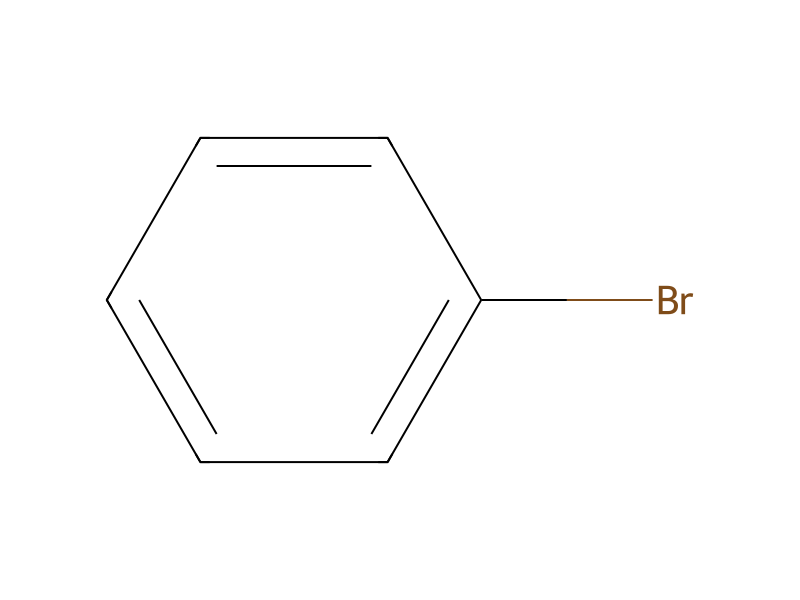
Bromobenzene → 4-Pentyl-2,3,4,5-tetrahydro-1,1'-biphenyl

HRID 504138
Drucken

Reaktionsgleichung

Reaktionsgleichung von HRID 504138
[Mg].Br[C:3]1[CH:8]=[CH:7][CH:6]=[CH:5][CH:4]=1.[CH2:9]([CH:14]1[CH2:19][CH2:18][C:17](=O)[CH2:16][CH2:15]1)[CH2:10][CH2:11][CH2:12][CH3:13].[Cl-].[NH4+]>C1COCC1>[CH2:9]([CH:14]1[CH2:19][CH2:18][C:17]([C:3]2[CH:8]=[CH:7][CH:6]=[CH:5][CH:4]=2)=[CH:16][CH2:15]1)[CH2:10][CH2:11][CH2:12][CH3:13]
KomponentenVersuchsvorschriftAufarbeitungQuellen und NachweiseNotizen zur Reaktion

Komponenten

6

Edukt 4

HCID 7961BromobenzeneHCID 25517Ammonium ChlorideHCID 5660974-PentylcyclohexanoneHCID 5462224Magnesium

Produkt 1

HCID 136284884-Pentyl-2,3,4,5-tetrahydro-1,1'-biphenyl

Reagenzien, Katalysatoren, Lösungsmittel 1

HCID 8028Tetrahydrofuran
Lösungsmittel
2×

Versuchsvorschrift

In a 2,000 mL (inside volume) three-necked flask equipped with a reflux condenser, 700 mL of anhydrous THF and 27 g of magnesium shavings were charged, to which 160 g of bromobenzene were added dropwise at a speed to ensure continuous mild reflux. After the dropping was completed, the mixture was further stirred for 1 h. To the mixture, a solution of 170 g of 4-n-pentylcyclohexanone (available from Tokyo Chemical Industry Co., Ltd.) in 100 mL of THF was added at 50° C. The mixture was then refluxed for 2 h. The obtained reaction product liquid was cooled to room temperature, poured into an aqueous ammonium chloride solution and then extracted with benzene. The benzene solution was added with 1 g of p-toluenesulfonic acid and refluxed while removing water generated. When water was no longer distilled, the reaction mixture was cooled to room temperature, washed with an aqueous sodium hydrogen carbonate solution and then with an aqueous sodium chloride solution, dried and then concentrated. The residue was purified by silica gel column chromatography to obtain (4-n-pentylcyclohexenyl)benzene. The thus obtained product was dissolved in 1,000 mL of ethyl acetate and subjected to hydrogenation at 0.5 MPa using 2 g of 5% by mass-Pd/C as a catalyst. When a theoretical amount of hydrogen was consumed, the catalyst was separated by filtration. The resulting filtrate was concentrated to obtain 220 g of (4-n-pentylcyclohexyl)benzene. As a result of gas chromatographic analysis, it was confirmed that the (4-n-pentylcyclohexyl)benzene purity was 99.2% and the cis/trans molar ratio was 0.67.

Aufarbeitung

  1. customIn a 2,000 mL (inside volume) three-necked flask equipped with a reflux condenser
  2. additionwere added dropwise at a speed
  3. temperatureThe mixture was then refluxed for 2 h
  4. customThe obtained reaction product liquid
  5. extractionextracted with benzene
  6. additionThe benzene solution was added with 1 g of p-toluenesulfonic acid
  7. temperaturerefluxed
  8. customwhile removing water
  9. distillationWhen water was no longer distilled
  10. temperaturethe reaction mixture was cooled to room temperature
  11. washwashed with an aqueous sodium hydrogen carbonate solution
  12. dry with materialwith an aqueous sodium chloride solution, dried
  13. concentrationconcentrated
  14. customThe residue was purified by silica gel column chromatography

Quellen und Nachweise

ORD-Eintrag
ord-825b9e4ca8a84fb0b6d465899e40ba28
Quelldatensatz
uspto-grants-2010_08
DOI
10.6084/m9.figshare.5104873.v1
Patentnummer
US07777081B2

Notizen zur Reaktion

Auf dieser SeiteKomponentenVersuchsvorschriftAufarbeitungQuellen und NachweiseNotizen zur Reaktion


