2-Phenylethanol → Cyclopropanecarboxylic acid, 2-phenylethyl ester
Reaktionsgleichung

[CH:1]1([C:4]([OH:6])=[O:5])[CH2:3][CH2:2]1.[C:7]1([CH2:13][CH2:14]O)[CH:12]=[CH:11][CH:10]=[CH:9][CH:8]=1>C([O-])(=O)C([O-])=O.[Sn+4].C([O-])(=O)C([O-])=O>[CH:1]1([C:4]([O:6][CH2:14][CH2:13][C:7]2[CH:12]=[CH:11][CH:10]=[CH:9][CH:8]=2)=[O:5])[CH2:3][CH2:2]1Komponenten
Edukt 2
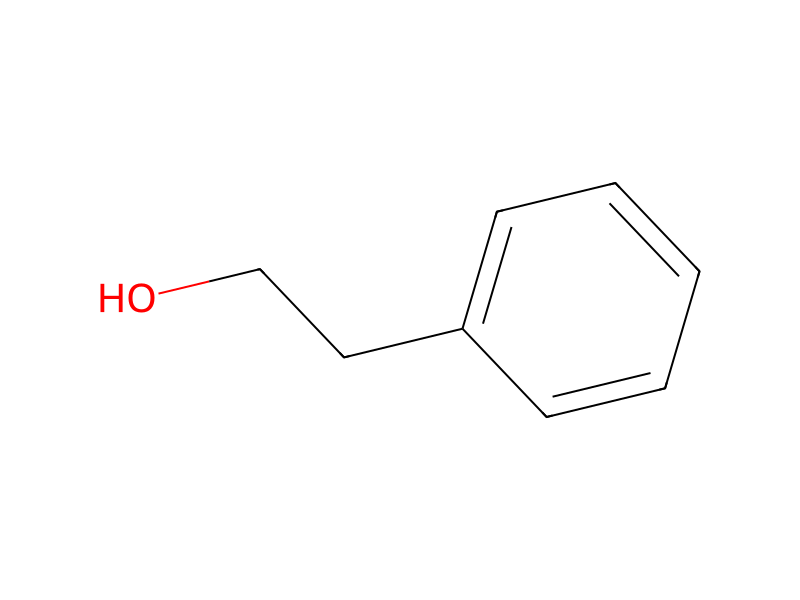
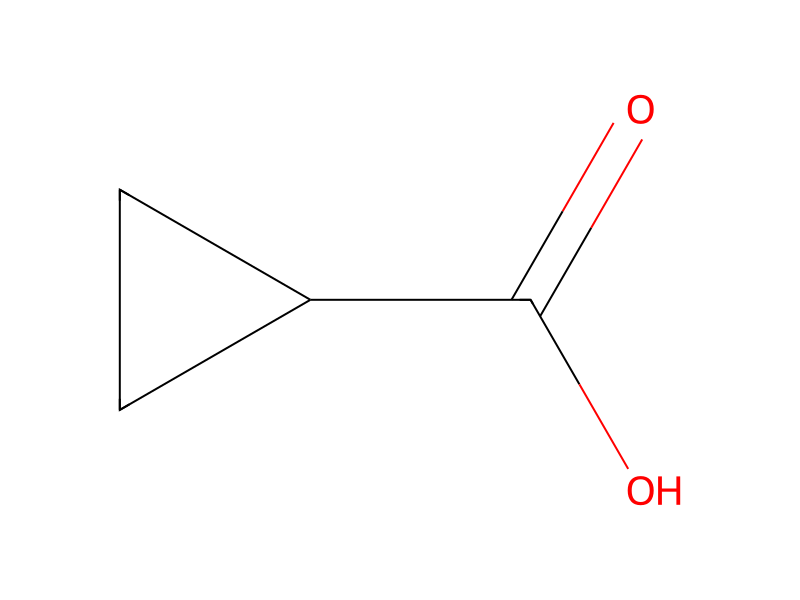
Produkt 1

Reagenzien, Katalysatoren, Lösungsmittel 1

Reaktionsbedingungen
- Temperatur
- 175 °C
Versuchsvorschrift
A 1-L, 4-neck, round-bottom flask, fitted with a thermometer, mechanical stirrer, nitrogen inlet tube and Liebig condenser/receiving flask, was charged with 258.3 g (3.00 mol, 1.00 equiv) of cyclopropanecarboxylic acid, 366.5 g (3.00 mol, 1.00 equiv) of 2-phenylethanol, and 1.14 g (0.2 wt. %) of tin oxalate (Fascat® 2001). The air was removed with three cycles of evacuation/nitrogen-fill using a mechanical vacuum pump (50-100 torr). The rate of stirring was set at ca. 200 rpm, the nitrogen sparge was set at 0.05 scfh, and the reaction mixture was heated to 175° C. After a 2-h hold, 78.0 g of distillate had been collected. The temperature was increased to 180° C. and held for 1 h; an additional 9.6 g of distillate was collected. Finally, the temperature was increased to 190° C. and held for 2 h, and an additional 8.6 g of distillate was collected. The acid number was 5.30 mg KOH/g (98.3% conversion). The excess 2-phenylethanol (12.4% by GLC) and cyclopropanecarboxylic acid (0.82% by GLC) were removed by vacuum distillation through a 15-cm Vigreux column at 95-135° C. (10 torr) in a 101-g forecut. The crude product was distilled at 136-139° C. (10 torr) through a 15-cm Vigreux column to afford 410 g (72%) of 2-phenylethyl cyclopropanecarboxylate (99.1% pure by GLC): residual alcohol, 0.6% (GLC); APHA color, 4.0; acid number, 0.14 mg KOH/g; saponification number, 291 mg KOH/g (theor. 295 mg KOH/g). The cyclopropanecarboxylic acid distilled out of the reaction mixture with the water of reaction can be recycled to improve the yield.
Aufarbeitung
- customThe air was removed with three cycles of evacuation/nitrogen-fill
- customthe nitrogen sparge
- distillationAfter a 2-h hold, 78.0 g of distillate had been collected
- temperatureThe temperature was increased to 180° C.
- distillationan additional 9.6 g of distillate was collected
- temperatureFinally, the temperature was increased to 190° C.
- waitheld for 2 h
- distillationan additional 8.6 g of distillate was collected
- customThe excess 2-phenylethanol (12.4% by GLC) and cyclopropanecarboxylic acid (0.82% by GLC) were removed by vacuum distillation through a 15-cm Vigreux column at 95-135° C. (10 torr) in a 101-g forecut
- distillationThe crude product was distilled at 136-139° C. (10 torr) through a 15-cm Vigreux column
Quellen und Nachweise
- ORD-Eintrag
- ord-82ba470459cf4681b204f958abbb4add
- Quelldatensatz
- uspto-grants-2010_08
- Patentnummer
- US07785573B2
Notizen zur Reaktion
Wird geladen…