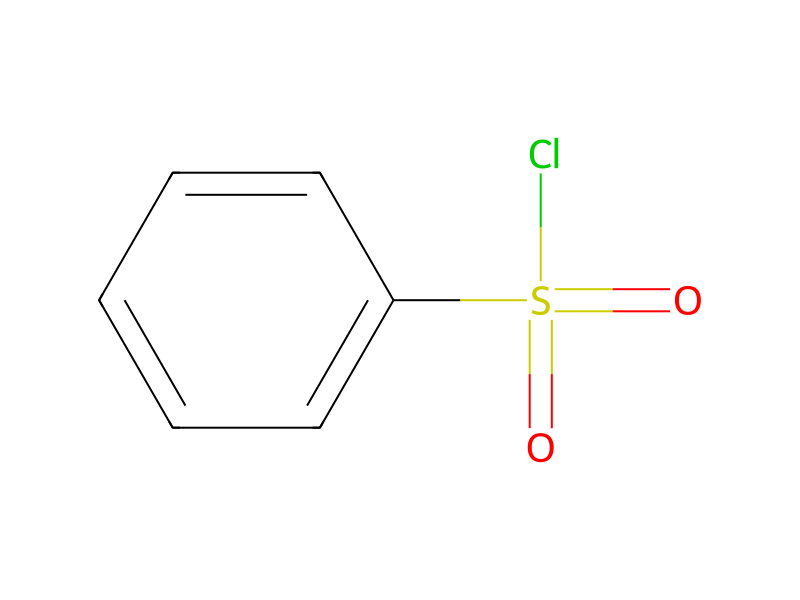
[Cl:1][C:2]1[CH:3]=[C:4]2[C:10]([I:11])=[CH:9][NH:8][C:5]2=[N:6][CH:7]=1.[H-].[Na+].[C:14]1([S:20](Cl)(=[O:22])=[O:21])[CH:19]=[CH:18][CH:17]=[CH:16][CH:15]=1>CN(C)C=O>[C:14]1([S:20]([N:8]2[C:5]3=[N:6][CH:7]=[C:2]([Cl:1])[CH:3]=[C:4]3[C:10]([I:11])=[CH:9]2)(=[O:22])=[O:21])[CH:19]=[CH:18][CH:17]=[CH:16][CH:15]=1To a solution of 5-chloro-3-iodo-1H-pyrrolo[2,3-b]pyridine (2, 5.00 g, 18.0 mmol) in 80.0 mL of N,N-dimethylformamide, sodium hydride (1.1 g, 60% in mineral oil, 27.0 mmol) was added slowly. A solution of benzenesulfonyl chloride (11, 2.40 mL, 18.8 mmol) in 10.0 mL of N,N-dimethylformamide was added dropwise at 0° C. The reaction mixture was stirred at room temperature for 15 hours, then poured into ice water and extracted with ethyl acetate. The organic layer was washed with brine, dried over magnesium sulfate, filtered and the filtrate concentrated under vacuum. The resulting solid was washed with 5% ethyl acetate in hexane, isolated by filtration, and dried to provide the desired compound (12, 5.9 g). 1H NMR was consistent with the compound structure. 1-Benzenesulfonyl-3-iodo-5-methyl-1H-pyrrolo[2,3-b]pyridine 13
Wird geladen…