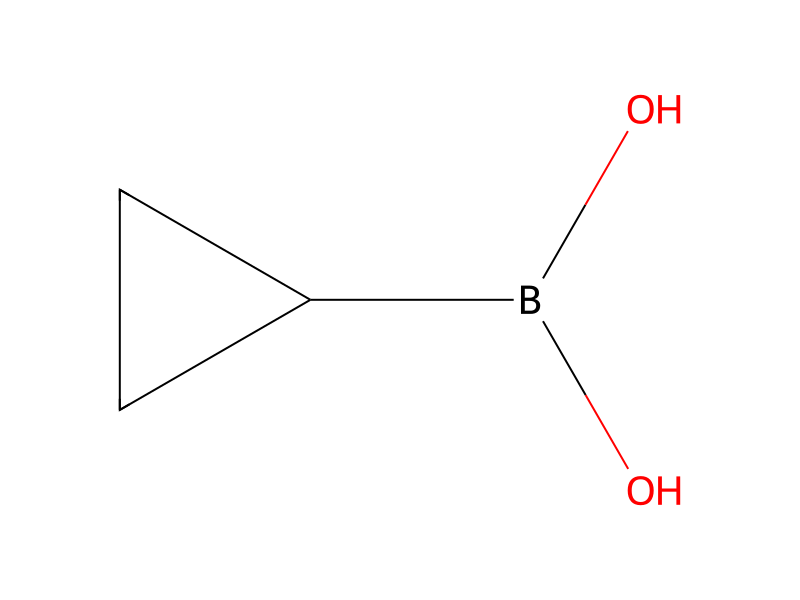
C([O-])(O)=O.[Na+].[CH:6]1(B(O)O)[CH2:8][CH2:7]1.C(=O)([O-])[O-].[K+].[K+].[CH2:18]([O:25][C:26]1[CH:31]=[CH:30][N:29]([CH2:32][CH:33]2[CH2:35][CH2:34]2)[C:28](=[O:36])[C:27]=1I)[C:19]1[CH:24]=[CH:23][CH:22]=[CH:21][CH:20]=1>O1CCOCC1>[CH2:18]([O:25][C:26]1[CH:31]=[CH:30][N:29]([CH2:32][CH:33]2[CH2:35][CH2:34]2)[C:28](=[O:36])[C:27]=1[CH:6]1[CH2:8][CH2:7]1)[C:19]1[CH:24]=[CH:23][CH:22]=[CH:21][CH:20]=1NaHCO3 (1.0 g, excess), cyclopropylboronic acid (0.74 g, 8.93 mmol), potassium carbonate (1.23 g, 8.93 mmol) and [1,1′-bis(diphenylphosphino)ferrocene] dichloropalladium(II)-DCM complex (0.36 g, 0.45 mmol) were added to a solution of intermediate D10 (1.0 g, 2.98 mmol) in 1,4-dioxane (10 ml). The resulting mixture was heated at 175° C. for 20 minutes under microwave irradiation, after which it was filtered through diatomaceous earth and the solvent was evaporated in vacuo. The crude residue was purified by column chromatography (silica gel; 0-3% methanol/DCM as eluent). The desired fractions were collected and evaporated in vacuo yielding D34 (0.6 g, 69%).
Wird geladen…