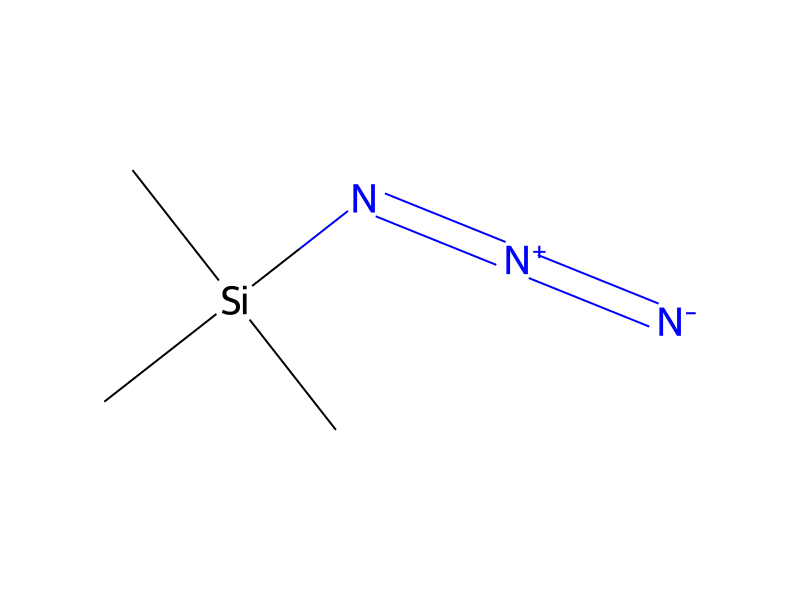
Cl.[F:2][C:3]1([F:8])[CH2:7][CH2:6][NH:5][CH2:4]1.C=O.C([N:13]([CH2:16][CH3:17])[CH2:14][CH3:15])C.C[Si]([N:22]=[N+:23]=[N-:24])(C)C.[F:25][C:26]([F:36])([F:35])[C:27]1[CH:32]=CC([N+]#[C-])=[CH:29][CH:28]=1>CO>[F:2][C:3]1([F:8])[CH2:7][CH2:6][N:5]([CH2:17][C:16]2[N:13]([C:14]3[CH:15]=[CH:32][C:27]([C:26]([F:36])([F:35])[F:25])=[CH:28][CH:29]=3)[N:24]=[N:23][N:22]=2)[CH2:4]1A solution of 3,3-difluoropyrrolidine hydrochloride (129 mg, 0.90 mmol, Sigma-Aldrich), formaldehyde (37%, aqueous, 0.067 mL, 0.9 mmol) and triethylamine (0.125 mL, 0.900 mmol) in methanol (4 mL) was stirred at room temperature for 1.5 h. Trimethylsilyl azide (0.155 mL, 1.170 mmol) and 4-(trifluoromethyl)phenyl isocyanide (200 mg, 1.170 mmol) were added and the reaction mixture stirred for 2 days at room temperature. The solution was concentrated in vacuo. The resulting residue was purified using MDAP. Fractions containing product were combined and concentrated in vacuo. The resulting solid was redissolved in MeOH and passed through a 5 g NH2 ion exchange column to give the title compound as a white solid (252 mg).