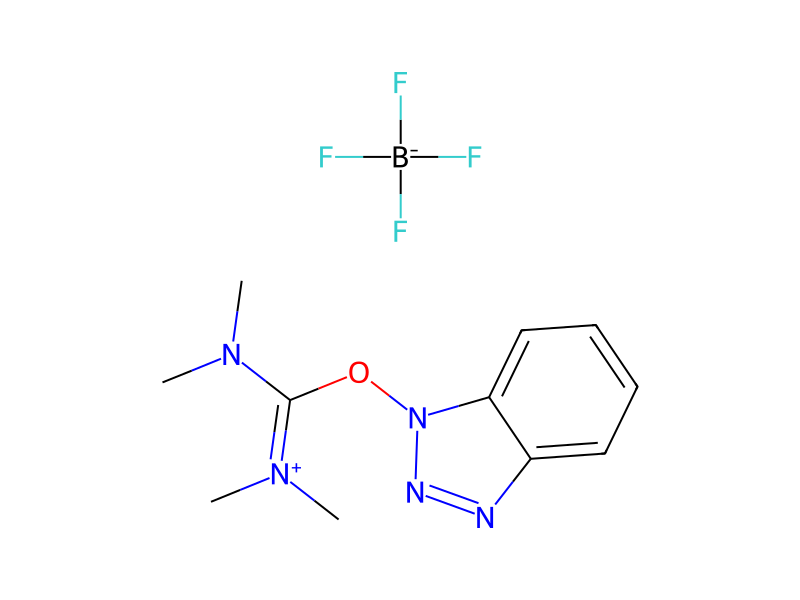
[C:1]([NH:4][C:5]1[CH:10]=[C:9]([C:11]2[O:12][C:13]([C:23](O)=[O:24])=[C:14]([C:16]3[CH:21]=[CH:20][CH:19]=[CH:18][C:17]=3[Cl:22])[N:15]=2)[C:8]([CH3:26])=[CH:7][N:6]=1)(=[O:3])[CH3:2].C[N:28](C(ON1N=NC2C=CC=CC1=2)=[N+](C)C)C.[B-](F)(F)(F)F.N>C(Cl)Cl>[C:1]([NH:4][C:5]1[CH:10]=[C:9]([C:11]2[O:12][C:13]([C:23]([NH2:28])=[O:24])=[C:14]([C:16]3[CH:21]=[CH:20][CH:19]=[CH:18][C:17]=3[Cl:22])[N:15]=2)[C:8]([CH3:26])=[CH:7][N:6]=1)(=[O:3])[CH3:2]To a round bottom flask was added 2-[2-(acetylamino)-5-methylpyridin-4-yl]-4-(2-chlorophenyl)-1,3-oxazole-5-carboxylic acid (0.12 g, 0.33 mmol), DCM (4 mL), TBTU (0.42 g, 1.3 mmol), and TEA (0.35 mL, 2.5 mmol). The mixture was allowed to stir for 5 min at rt, and then ammonia (0.5M in dioxane, 32 mL) was added. The resulting mixture was allowed to stir at rt overnight and then concentrated. DCM and water were added. The organic solution was separated, dried over MgSO4, filtered and concentrated. The residue was purified by column chromatography to give 2-[2-(acetylamino)-5-methylpyridin-4-yl]-4-(2-chlorophenyl)-1,3-oxazole-5-carboxamide (0.018 g, 15%). LCMS (FA): m/z=371.4 (M+H).
Wird geladen…