Hydrochloric Acid → Methyl Ferulate
Reaktionsgleichung
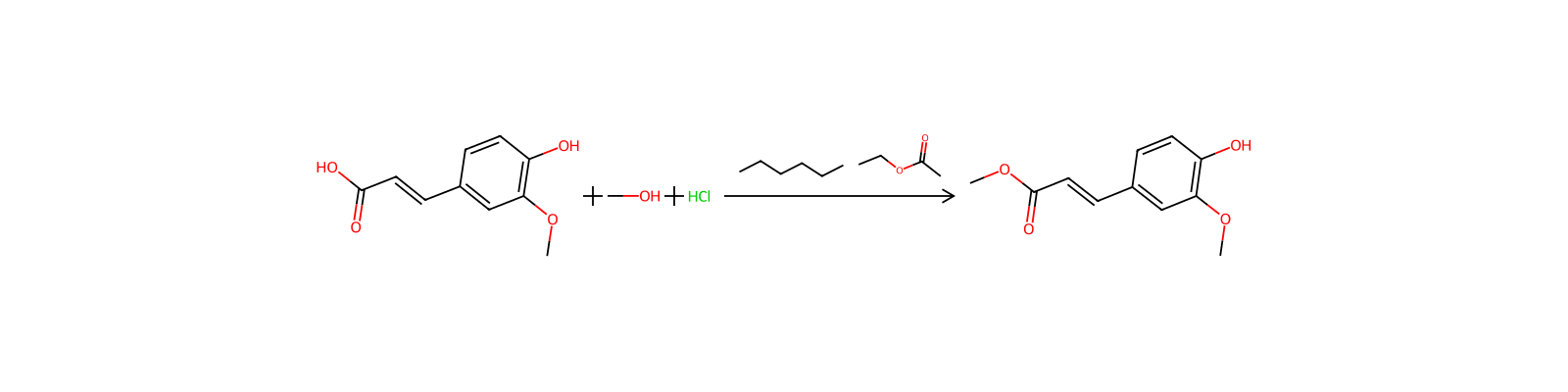
[C:1]([OH:14])(=[O:13])/[CH:2]=[CH:3]/[C:4]1[CH:12]=[CH:11][C:9]([OH:10])=[C:6]([O:7][CH3:8])[CH:5]=1.[CH3:15]O.Cl>CCCCCC.C(OCC)(=O)C>[C:1]([O:14][CH3:15])(=[O:13])/[CH:2]=[CH:3]/[C:4]1[CH:12]=[CH:11][C:9]([OH:10])=[C:6]([O:7][CH3:8])[CH:5]=1Komponenten
5
Edukt 3


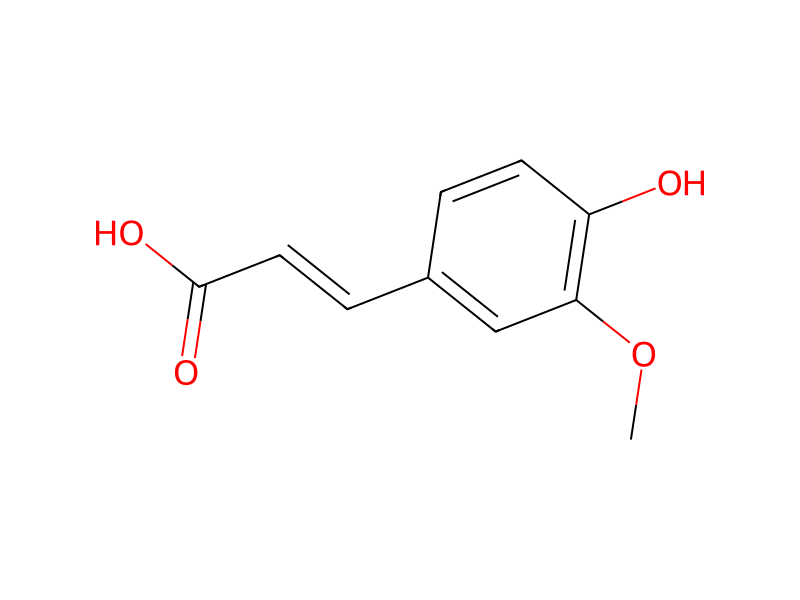
Produkt 1
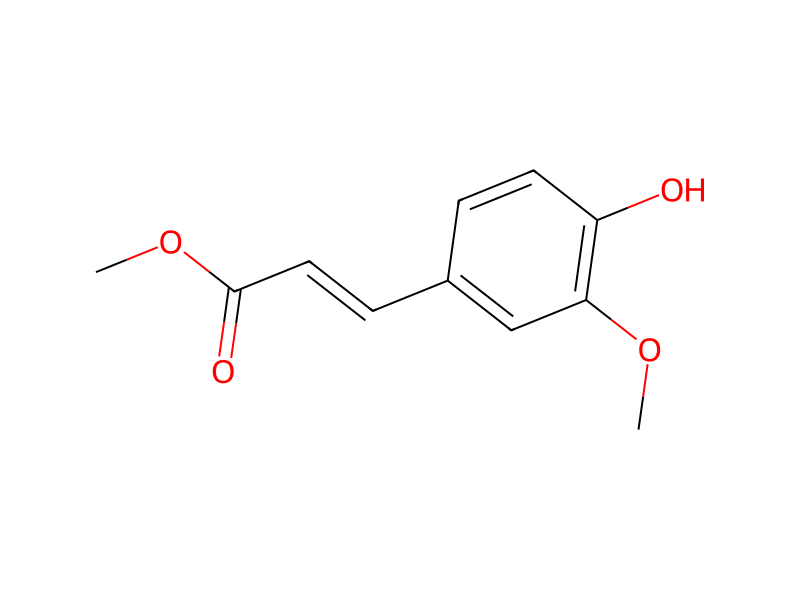
Reagenzien, Katalysatoren, Lösungsmittel 1

Versuchsvorschrift
Ferulic acid (4.85 g) and then methyl alcohol (50 ml) containing hydrogen chloride (4%) were placed in an egg-plant type flask (200 ml), and heated under reflux for 1 hour. The disappearance of the starting material was confirmed by thin layer chromatography (TLC: n-hexane/ethyl acetate=2/1), then the solvent was evaporated under reduced pressure by a rotary evaporator. Benzene was added to the residue, and then, the solvent was again evaporated by a rotary evaporator to obtain the crude product. The resulting crude product was separated and purified by silica gel column chromatography (diameter=5.5×7.0 cm; 60 g; n-hexane/ethyl acetate=2/1) to obtain the above-identified compound. The product was crystallized from n-hexane to obtain a white crystal (5.09 g; 97.9%).