Reaktionsgleichung

Cl.[NH2:2][C:3]1[CH:8]=[CH:7][C:6]([C:9]2[N:10]=[CH:11][C:12](=[O:15])[NH:13][CH:14]=2)=[CH:5][CH:4]=1.C(N(CC)CC)C.C(N)(=O)CC.[NH:28]1[CH:33]=[CH:32]N=C[C:29]1=[O:34]>CN(C)C=O>[CH2:14]([N:13]=[C:12]=[O:15])[CH3:9].[CH2:33]([NH:28][C:29](=[O:34])[NH:2][C:3]1[CH:4]=[CH:5][C:6]([C:9]2[N:10]=[CH:11][C:12](=[O:15])[NH:13][CH:14]=2)=[CH:7][CH:8]=1)[CH3:32]Komponenten
Edukt 4
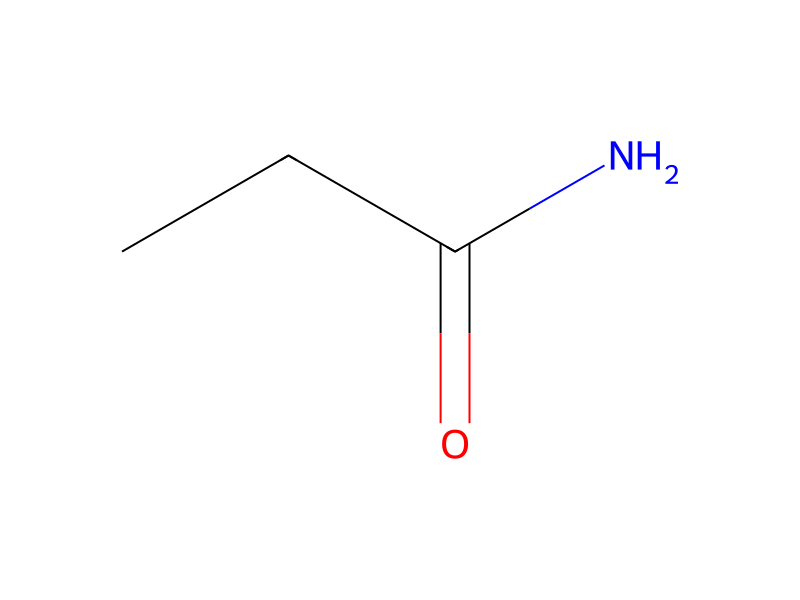



Produkt 2


Reagenzien, Katalysatoren, Lösungsmittel 1

Versuchsvorschrift
5-(4-Aminophenyl)-2(1H)-pyrazinone hydrochloride (1.5 g) was suspended in dimethylformamide (20 ml) and triethylamine (3 ml) was added. The dark solution was filtered. Ethyl isocyanate (0.53 ml) was prepared by slowly adding lead tetra acetate (7.3 g) to a solution of propionamide (1.2 g) in dimethylformamide (50 ml). The solution was initially blood-red, but after stirring for one hour at room temperature it turned colourless. The solution of pyrazinone was added and the mixture stirred at room temperature for 36 hours. It was evaporated to dryness and the residue was washed with water; the resulting orange solid was collected by filtration. Recrystallization from glacial acetic acid afforded the title compound; m.p. >300° C.; νmax (liquid paraffin) 1660, 1640 cm-1 ; δ (DMSO-d6) 1.07 (t, 3H, CH3), 6.05 (t, 1H, --NHEt), 7.93, 8.08 (2d, 2H, pyridine H's).
Aufarbeitung
- filtrationThe dark solution was filtered
- stirringthe mixture stirred at room temperature for 36 hours
- customIt was evaporated to dryness
- washthe residue was washed with water
- filtrationthe resulting orange solid was collected by filtration
- customRecrystallization from glacial acetic acid
Quellen und Nachweise
- ORD-Eintrag
- ord-f806cdb2a6044250a09221ef9eec01a9
- Quelldatensatz
- uspto-grants-1987_04
- Patentnummer
- US04657906
Verknüpfte Notizen
Wird geladen…