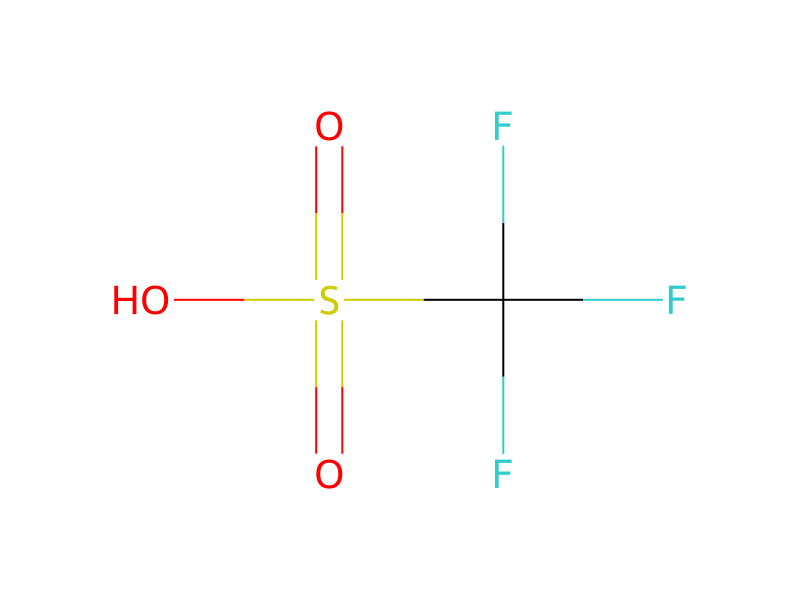
Trifluoromethanesulfonic acid → N-Methyldesloratadine
HRID 542762
Reaktionsgleichung

Cl.[CH3:2][N:3]1[CH2:8][CH2:7][CH:6]([C:9]([C:11]2[C:16]([CH2:17][CH2:18][C:19]3[CH:24]=[CH:23][CH:22]=[C:21]([Cl:25])[CH:20]=3)=[CH:15][CH:14]=[CH:13][N:12]=2)=O)[CH2:5][CH2:4]1.FC(F)(F)S(O)(=O)=O>>[Cl:25][C:21]1[CH:22]=[CH:23][C:24]2[C:9](=[C:6]3[CH2:7][CH2:8][N:3]([CH3:2])[CH2:4][CH2:5]3)[C:11]3=[N:12][CH:13]=[CH:14][CH:15]=[C:16]3[CH2:17][CH2:18][C:19]=2[CH:20]=1Komponenten
3


Versuchsvorschrift
A solution of 177 g (0.49 mole) of a product of Step D above in 480 mL (814.1 g, 5.31 mole) of trifluoromethanesulfonic acid at 90°-95° C. for 18 hours under nitrogen. Completeness of the reaction is determined by thin-layer chromatography. The cooled reaction is quenched with ice-water and the pH is adjusted to 6 with barium carbonate. The product is extracted into methylene chloride, which is concentrated under reduced pressure to about 1 liter and washed with water. The product is extracted into 1N hydrochloric acid, which is treated with 30 g of Darco, and filtered through celite. The pH of the filtrate is adjusted to 10 with 50% aqueous sodium hydroxide and the product is extracted into methylene chloride, which is removed under reduced pressure. The residue is dissolved in hot hexane, which is filtered to remove insolubles. The filtrate is concentrated to a residual beige powder. Yield: 126 g (HPLC purity 80%), 65% of theory.