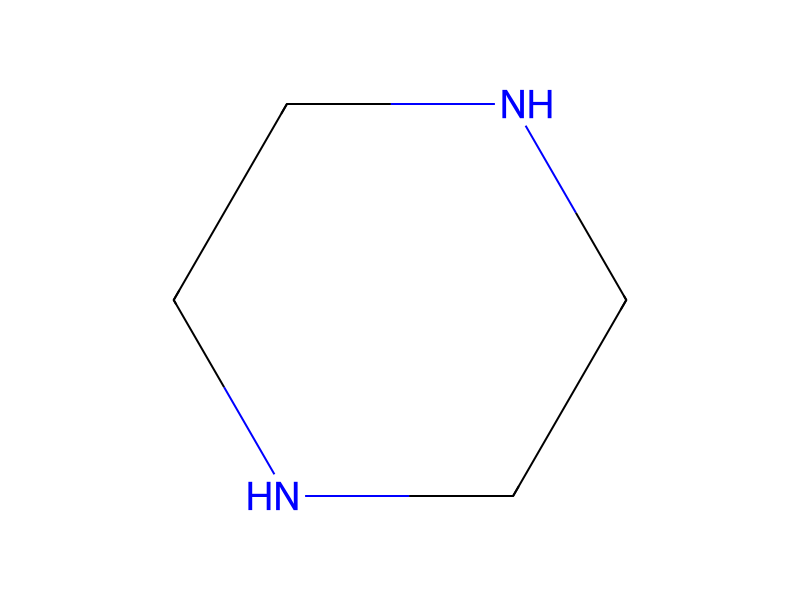
Piperazine → HCID 70495615, Verbindung
HRID 544235
Reaktionsgleichung

[CH2:1]([N:3]1[C:12]2[C:7](=[CH:8][C:9]([Br:14])=[C:10]([Cl:13])[CH:11]=2)[C:6](=[O:15])[C:5]([C:16]([OH:18])=[O:17])=[CH:4]1)[CH3:2].[NH:19]1[CH2:24][CH2:23][NH:22][CH2:21][CH2:20]1>N1C=CC=CC=1>[ClH:13].[CH2:1]([N:3]1[C:12]2[C:7](=[CH:8][C:9]([Br:14])=[C:10]([N:19]3[CH2:24][CH2:23][NH:22][CH2:21][CH2:20]3)[CH:11]=2)[C:6](=[O:15])[CH:5]([C:16]([OH:18])=[O:17])[CH2:4]1)[CH3:2]Komponenten
4
Edukt 2

Produkt 1

Reagenzien, Katalysatoren, Lösungsmittel 1

Versuchsvorschrift
A mixture of 1-ethyl-6-bromo-7-chloro-1,4-dihydro-4-oxoquinoline-3-carboxylic acid 1.65 g, piperazine 2.15 g and pyridine 2 ml was refluxed for 12 hours by heating. The reaction mixture was evaporated under vacuum and dissolved in aqueous acetic acid. The insoluble matters were removed by filtration. The filtrate was neutralized with an aqueous solution of NaOH. The precipitated crystals were collected by filtration and washed with water. The precipitate was recrystallized from a mixed solvent of concentrated hydrochloric acid and ethanol to obtain 1.4 g (67%) of 1-ethyl-6-bromo-dihydro-4-oxo-7-(1-piperazinyl)quinoline-3-carboxylic acid hydrochloride as colorless needles.