StartseiteMCPWorkbenchSkills
StartseiteWorkbenchBenachrichtigungenMein Bereich
llms.txt · MCP-AnleitungDatenschutz · Nutzungsbedingungen · Supportv1.8.3
  1. Startseite
  2. /Reaktion

Diethyl Malonate → 5-Methyl-3-isoxazolepropionic acid

HRID 544625
Drucken

Reaktionsgleichung

Reaktionsgleichung von HRID 544625
[H-].[Na+].[C:3]([O:11]CC)(=[O:10])[CH2:4][C:5](OCC)=O.[H][H].ClC[C:18]1[CH:22]=[C:21]([CH3:23])[O:20][N:19]=1>O1CCCC1>[CH3:23][C:21]1[O:20][N:19]=[C:18]([CH2:5][CH2:4][C:3]([OH:11])=[O:10])[CH:22]=1
KomponentenVersuchsvorschriftAufarbeitungQuellen und NachweiseNotizen zur Reaktion

Komponenten

6

Edukt 4

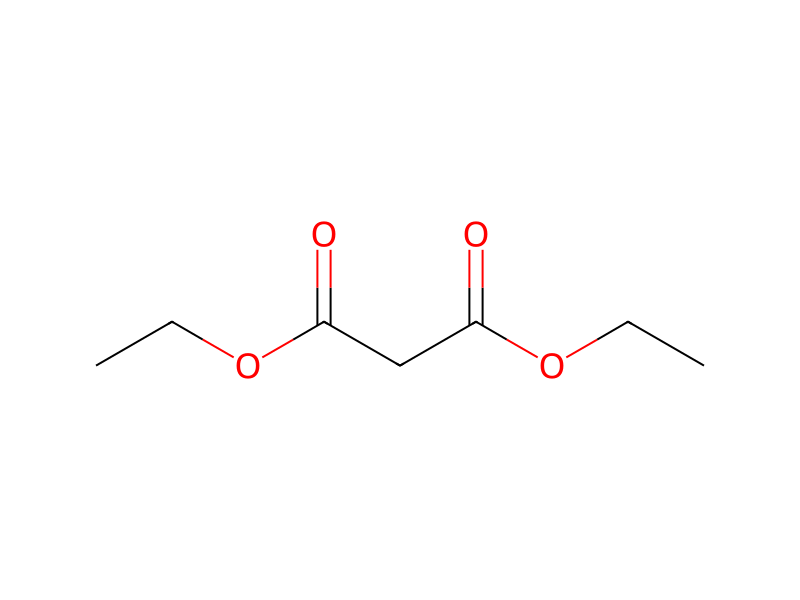
HCID 7761Diethyl MalonateHCID 24758Sodium hydrideHCID 27357633-(Chloromethyl)-5-methyl-1,2-oxazoleHCID 178418361HCID 178418361, Verbindung

Produkt 1

HCID 1333605-Methyl-3-isoxazolepropionic acidAusbeute 59,2 %

Reagenzien, Katalysatoren, Lösungsmittel 1

HCID 8028
Tetrahydrofuran
Lösungsmittel

Versuchsvorschrift

To a stirred suspension of 78.5 g of sodium hydride in 1 liter of tetrahydrofuran under nitrogen was added in portions 261 g of diethyl malonate. When evolution of hydrogen had ceased, 108 g of 3-chloromethyl-5-methylisoxazole was added and the reaction mixture was heated at reflux for four hours. A portion of the tetrahydrofuran (800 ml) was distilled off and 1 liter of 5% sodium hydroxide solution was added to the remaining mixture which was then heated at reflux for three hours and allowed to stand at room temperature for three days. The reaction mixture was filtered and the filtrate extracted with hexane. The aqueous layer was acidified with concentrated hydrochloric acid and extracted repeatedly with ethyl acetate. The ethyl acetate was removed in vacuo, 100 ml of pyridine added to the residue, and the mixture heated at reflux for three hours until evolution of carbon dioxide ceased. The mixture was concentrated in vacuo and the residue acidified with 6 N hydrochloride acid and cooled. The solid which separated was collected and dissolved in methylene dichloride. The layers were separated and the methylene dichloride layer concentrated in vacuo. The residual solid was slurried with isopropyl acetate--hexane to give 75.4 g of 5-methyl-3-isoxazolepropanoic acid, m.p. 82°-84° C.

Aufarbeitung

  1. temperaturethe reaction mixture was heated
  2. temperatureat reflux for four hours
  3. distillationA portion of the tetrahydrofuran (800 ml) was distilled off
  4. addition1 liter of 5% sodium hydroxide solution was added to the remaining mixture which
  5. temperaturewas then heated
  6. temperatureat reflux for three hours
  7. filtrationThe reaction mixture was filtered
  8. extractionthe filtrate extracted with hexane
  9. extractionextracted repeatedly with ethyl acetate
  10. customThe ethyl acetate was removed in vacuo, 100 ml of pyridine
  11. additionadded to the residue
  12. temperaturethe mixture heated
  13. temperatureat reflux for three hours until evolution of carbon dioxide
  14. concentrationThe mixture was concentrated in vacuo
  15. temperaturecooled
  16. customThe solid which separated
  17. customwas collected
  18. dissolutiondissolved in methylene dichloride
  19. customThe layers were separated
  20. concentrationthe methylene dichloride layer concentrated in vacuo

Quellen und Nachweise

ORD-Eintrag
ord-94bc376b909f40aba46f37eb290ad9f1
Quelldatensatz
uspto-grants-1984_05
DOI
10.6084/m9.figshare.5104873.v1
Patentnummer
US04451476

Notizen zur Reaktion

Auf dieser SeiteKomponentenVersuchsvorschriftAufarbeitungQuellen und NachweiseNotizen zur Reaktion


