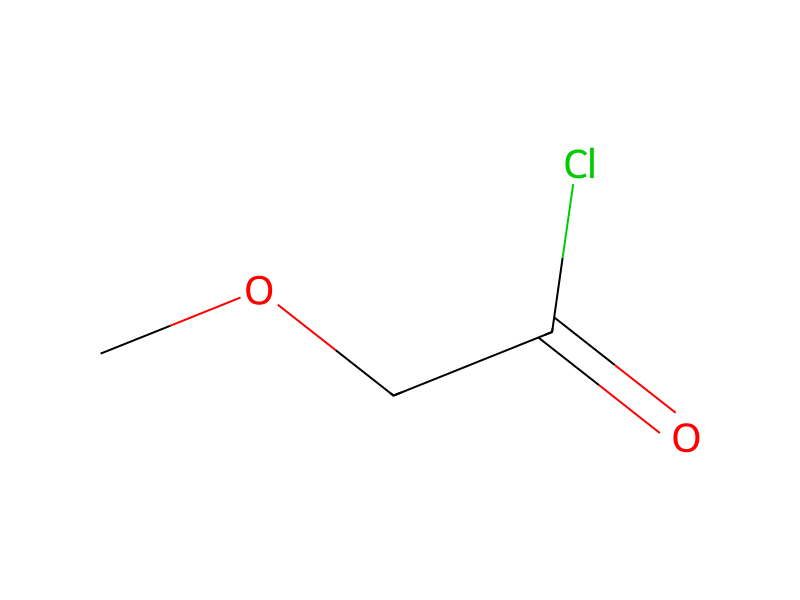
[CH3:1][C:2]1[O:6][N:5]=[C:4]([C:7]2[CH:12]=[CH:11][CH:10]=[CH:9][CH:8]=2)[C:3]=1[CH2:13][O:14][C:15]1[N:20]=[N:19][C:18]([NH2:21])=[CH:17][CH:16]=1.C(N(CC)CC)C.[CH3:29][O:30][CH2:31][C:32](Cl)=[O:33]>C1COCC1>[CH3:29][O:30][CH2:31][C:32]([NH:21][C:18]1[N:19]=[N:20][C:15]([O:14][CH2:13][C:3]2[C:4]([C:7]3[CH:8]=[CH:9][CH:10]=[CH:11][CH:12]=3)=[N:5][O:6][C:2]=2[CH3:1])=[CH:16][CH:17]=1)=[O:33]To a solution of 6-(5-methyl-3-phenyl-isoxazol-4-ylmethoxy)-pyridazin-3-ylamine (200 mg, 0.7 mmol) in THF (4 mL) was added triethylamine (0.12 mL, 0.85 mmol). The mixture was cooled in an ice bath and a solution of methoxyacetyl chloride (0.092 mL, 0.85 mmol) in THF (1 mL) was added dropwise. After stirring for 1 h at room temperature the precipitate was filtered and the organic phase was evaporated. The residue was dissolved in methanol (5 mL), sodium bicarbonate (1 spatula) was added and the mixture was stirred at room temperature for 2 h. The solvent was evaporated and the residue was extracted (dichloromethane/water). Then the organic phase was dried over sodium sulfate and concentrated. Chromatography (SiO2, dichloromethane:methanol=100:0 to 98:2) afforded the title compound (180 mg, 73%) as a white solid. MS: m/e=355.3 [M+H]+.