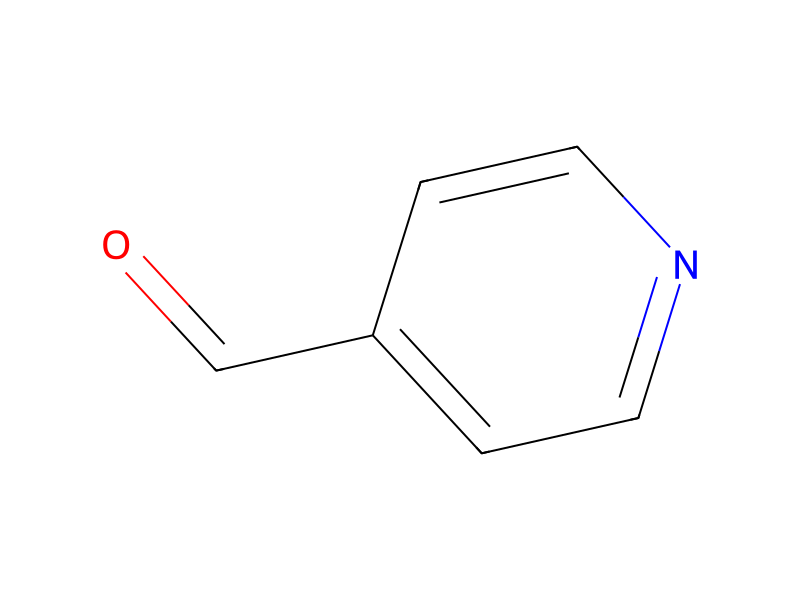
4-Pyridinecarboxaldehyde → HCID 58442023, Verbindung
HRID 552112
Reaktionsgleichung

[Cl:1][C:2]1[N:7]=[C:6]([NH:8][CH2:9][CH3:10])[C:5]([NH2:11])=[CH:4][N:3]=1.[N:12]1[CH:17]=[CH:16][C:15]([CH:18]=O)=[CH:14][CH:13]=1>CC(O)=O.CC(N(C)C)=O>[Cl:1][C:2]1[N:7]=[C:6]2[C:5]([N:11]=[C:18]([C:15]3[CH:16]=[CH:17][N:12]=[CH:13][CH:14]=3)[N:8]2[CH2:9][CH3:10])=[CH:4][N:3]=1Komponenten
4
Edukt 2

Produkt 1

Reagenzien, Katalysatoren, Lösungsmittel 1

Reaktionsbedingungen
- Temperatur
- 140 °C