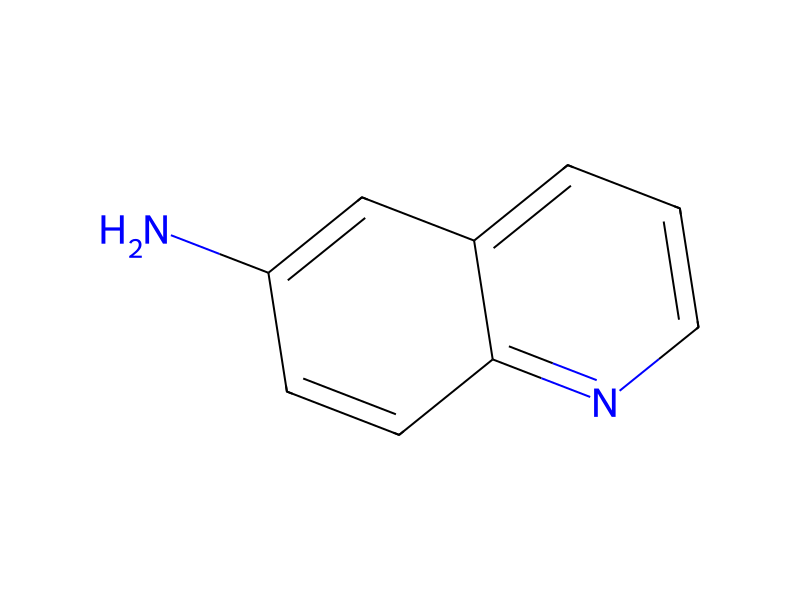
90.3 mg (0.24 mmol) of pentafluorophenyl (1-azabicyclo[2.2.2]oct-3-yl)acetate hydrochloride are dissolved in 1 ml of DMF, mixed with 51.6 mg (0.36 mmol) of 6-aminoquinoline and stirred at room temperature overnight. 1 g of MP-carbonate (polymer-bound carbonate, capacity: 2.5-3.5 mmol/g; from Argonaut Technologies, USA) is added. After 1 h, the polystyrene resin is filtered off and washed with THF. The combined filtrates are concentrated in vacuo, and the crude product is purified by preparative HPLC. The hydrochloride is prepared by mixing the product with a mixture of 1 M hydrochloric acid and acetonitrile and concentrating again. Drying under high vacuum results in 44 mg (50.2% of theory) of the title compound.