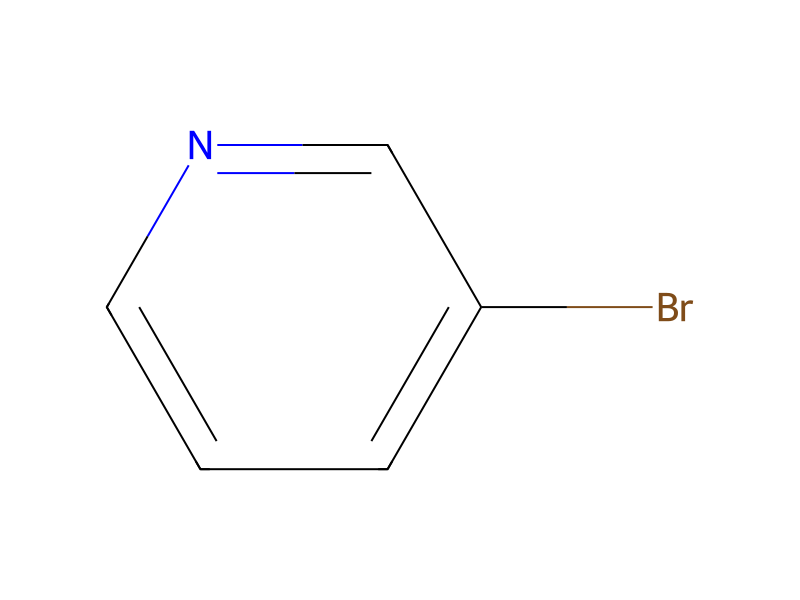
A mixture of 3-bromopyridine, 3-methoxyphenylboronic acid (1.3 eq.), 2N sodium carbonate, and (PPh3)4Pd in toluene was stirred at 80° C. over night. The reaction mixture was taken up in ethyl acetate. The organic phase was washed with saturated sodium bicarbonate and then brine, dried, and concentrated. The residue was diluted in CDM and the solution was treated with boron tribromide at −78° C. (acetone-dry ice bath). The bath was allowed to warm up to room temperature over approximately 5 hr. Methanol was added to quench the reaction. The volatiles were removed under reduced pressure. The residue was taken up in ethyl acetate and the resultant solution was washed with saturated sodium bicarbonate. The organic phase was then extracted with 3 N hydrochloric acid, which was then basified with sodium bicarbonate The aqueous phase was extracted with ethyl acetate, which was washed with saturated brine, dried, and concentrated. The resultant white solid was pure by TLC, MS, and 1H-NMR and was used without further purification.