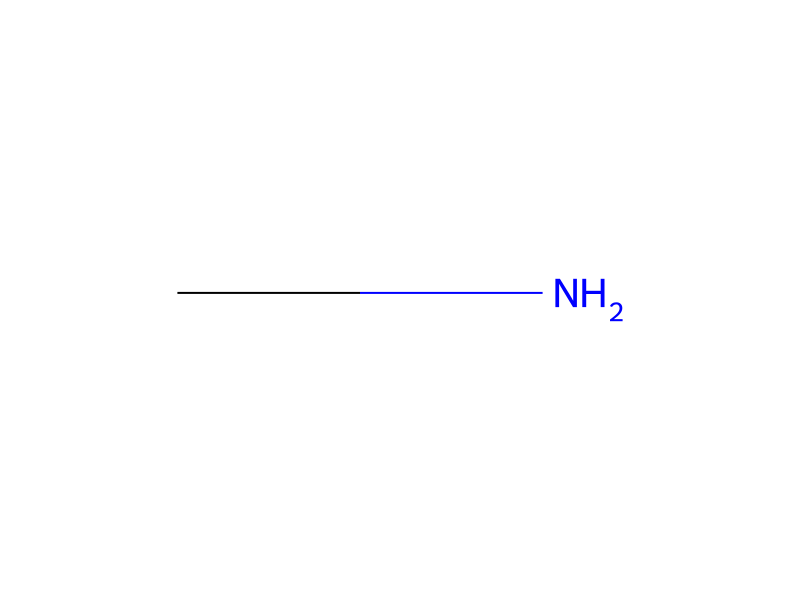
To a 1 L two-neck round bottom flask was added 2,6-dichloro-3-nitrobenzonitrile (11.1 g, 51.1 mmol) followed by ethyl acetate (102 mL). The flask was equipped with an internal thermometer and magnetic stir bar and cooled to 5° C. by immersion into an ice bath. Methylamine was added dropwise to the cooled reaction mixture as a 40% aqueous solution (8.9 mL, 115 mmol) with vigorous stirring. The reaction mixture was stirred for an additional 3 hours with cooling, after which more methylamine (1.8 mL, 23 mmol) was added. The reaction vessel was removed from the ice bath and stirred for an additional 1.5 hours. To the reaction mixture was added water (30 mL) followed immediately by hexane (45 mL) and the resulting slurry was stirred for 15 minutes. The solid was recovered by filtration and washed with water followed by methanol to provide 6-chloro-2-methylamino-3-nitro-benzonitrile (10.49 g, 96%) as a bright yellow solid, which was used directly without further purification. 1H NMR (400 MHz, DMSO-d6) δ 8.55-8.53 (m, 1H), 8.28 (d, 1H, J=9.0 Hz), 6.95 (d, 1H), J=9.0 Hz), 3.30 (d, 1H, J=5.5 Hz).