StartseiteMCPSkillsWorkbenchOpenChem
StartseiteWorkbenchBenachrichtigungenMein Bereich
llms.txt · skill.md · MCP-AnleitungDatenschutz · Nutzungsbedingungen · Supportv1.8.5
  1. Startseite
  2. /Reaktion

Triethylamine → 5-Nitro-3-trimethylsilanylethynyl-pyridin-2-ylamine

HRID 563995
Drucken

Reaktionsgleichung

[NH2:1][C:2]1[C:7](Br)=[CH:6][C:5]([N+:9]([O-:11])=[O:10])=[CH:4][N:3]=1.[CH3:12][Si:13]([C:16]#[CH:17])([CH3:15])[CH3:14].C(N(CC)CC)C>O1CCCC1.Cl[Pd](Cl)([P](C1C=CC=CC=1)(C1C=CC=CC=1)C1C=CC=CC=1)[P](C1C=CC=CC=1)(C1C=CC=CC=1)C1C=CC=CC=1.[Cu]I>[N+:9]([C:5]1[CH:6]=[C:7]([C:17]#[C:16][Si:13]([CH3:15])([CH3:14])[CH3:12])[C:2]([NH2:1])=[N:3][CH:4]=1)([O-:11])=[O:10]
KomponentenVersuchsvorschriftAufarbeitungQuellen und NachweiseNotizen zur Reaktion

Komponenten

7

Edukt 3

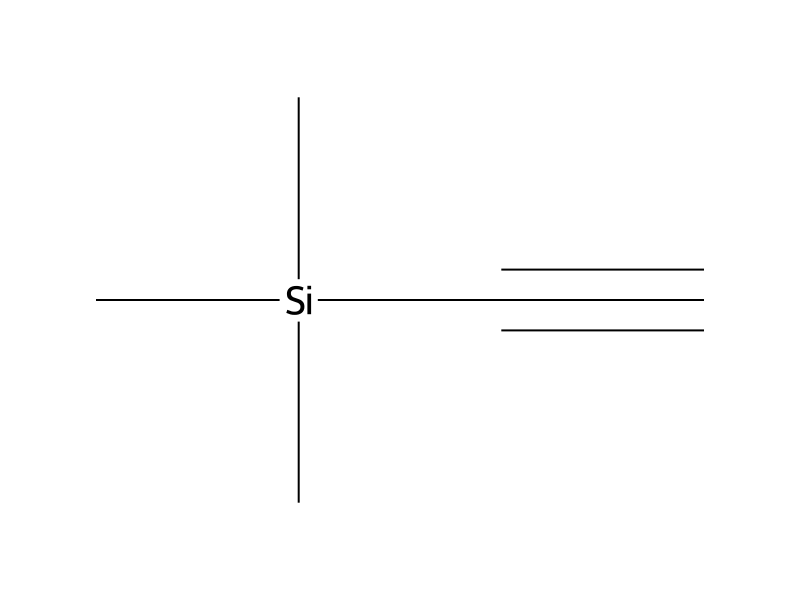
HCID 8471TriethylamineHCID 66111TrimethylsilylacetyleneHCID 27344122-Amino-3-bromo-5-nitropyridine

Produkt 1

HCID 115287895-Nitro-3-trimethylsilanylethynyl-pyridin-2-ylamine

Reagenzien, Katalysatoren, Lösungsmittel 3

HCID 24350Copper(1+) iodide; Copper(I) iodide; Cuprous iodide; Cuprous iodide (CuI)Katalysator
HCID 178418476
HCID 178418476, Verbindung
Katalysator
HCID 8028TetrahydrofuranLösungsmittel

Versuchsvorschrift

12.0 g 2-Amino-3-bromo-5-nitropyridine, 1.93 g dichlorobis(triphenyl-phosphine)palladium(II) and 0.524 g copper(I) iodide were dispersed under nitrogen in 60 ml dry tetrahydrofuran (THF). 7.03 g trimethylsilylacetylene and 16.71 g triethylamine were added and the mixture was stirred 16 hours (hrs) at room temperature (RT). The mixture was filtered, the filtrate was evaporated and the residue purified by chromatography on silica in ethyl acetate/heptane mixtures.

Aufarbeitung

  1. filtrationThe mixture was filtered
  2. customthe filtrate was evaporated
  3. customthe residue purified by chromatography on silica in ethyl acetate/heptane mixtures

Quellen und Nachweise

ORD-Eintrag
ord-f0308c8edc3549229abe39b6071792ab
Quelldatensatz
uspto-grants-2011_11
DOI
10.6084/m9.figshare.5104873.v1
Patentnummer
US08067599B2

Notizen zur Reaktion

Auf dieser SeiteKomponentenVersuchsvorschriftAufarbeitungQuellen und NachweiseNotizen zur Reaktion