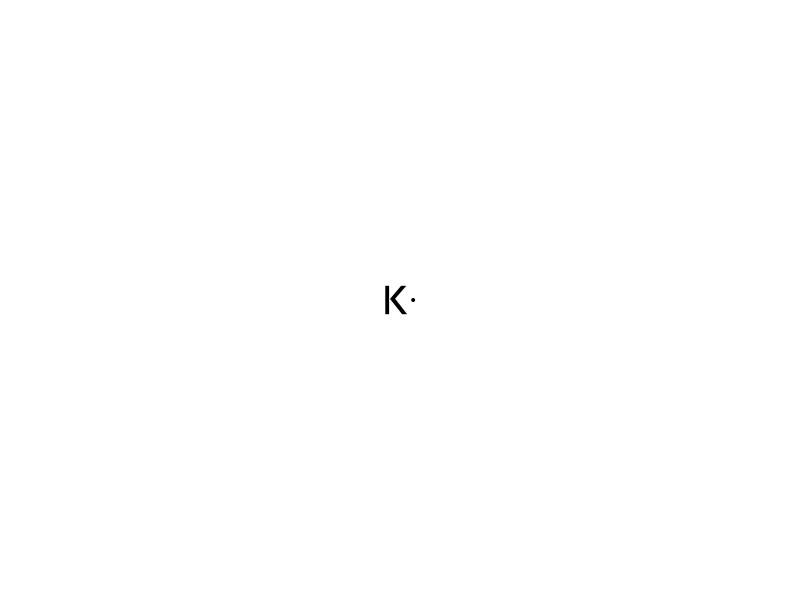
Seki (18 Chem. Pharm. Bull. 671-676, 1970) discloses a method for preparing Δ6,8-diene compounds, such as thebaine, from α,β-unsaturated ketones such as codeinone, which may be obtained from the natural alkaloid codeine. Codeinone was added to a mixture of p-toluenesulfonic acid (dehydrated prior to reaction), absolute methanol and dried benzene, the solution refluxed for 3 hours under azeotropic removal of water, and the reaction mixture purified by washing with diluted sodium hydroxide, to obtain thebaine. A reported maximum yield of 26.8% was reported when using 1.1-15 molar equivalents of p-toluenesulfonic acid to codeinone. Eppenberger et al. (51 Helv. Chim. Acta 381, 1968) report a four step method for converting dihydrocodeinone to thebaine which results in a similar yield of 27%. Schwartz et al. (97 J Am. Chem. Soc. 1239, 1975) demonstrate the total synthesis of thebaine in which the key step is the oxidative coupling of a reticuline derivative to a salutaridine derivative. The overall yield of dl-thebaine, however, was only in the 1-2% range based on isovanillin. Reaction of salutaridinol with an organic or inorganic acid halide or acid anhydride, followed by treatment with a strong base, is taught as a method of thebaine production in U.S. Pat. No. 3,894,026 to Sohar et al. A yield as high as 50.3% was reported (See, Col. 4, Line 29). Barber et al. (18 J Med. Chem. 1074-1077, 1975) report synthesizing thebaine (as well as oripavine) from codeine and morphine. Barber et al. teach methylation of the potassium salt of codeine to give codeine methyl ether followed by oxidation with γ-MnO2 (See also, U.S. Pat. No. 4,045,440 to Rapoport et al., 1977). These authors claim a 67% yield of oxycodone from codeine. European Patent Application No. EP 0 889 045 A1 likewise teaches a process for the production of thebaine from the more readily available morphinans codeine and morphine. Such method provides for converting the starting material to an alkali metal or quaternary ammonium cation and reacting the same with a compound of the formula RX wherein R is an alkyl or acyl group and X is a leaving group.