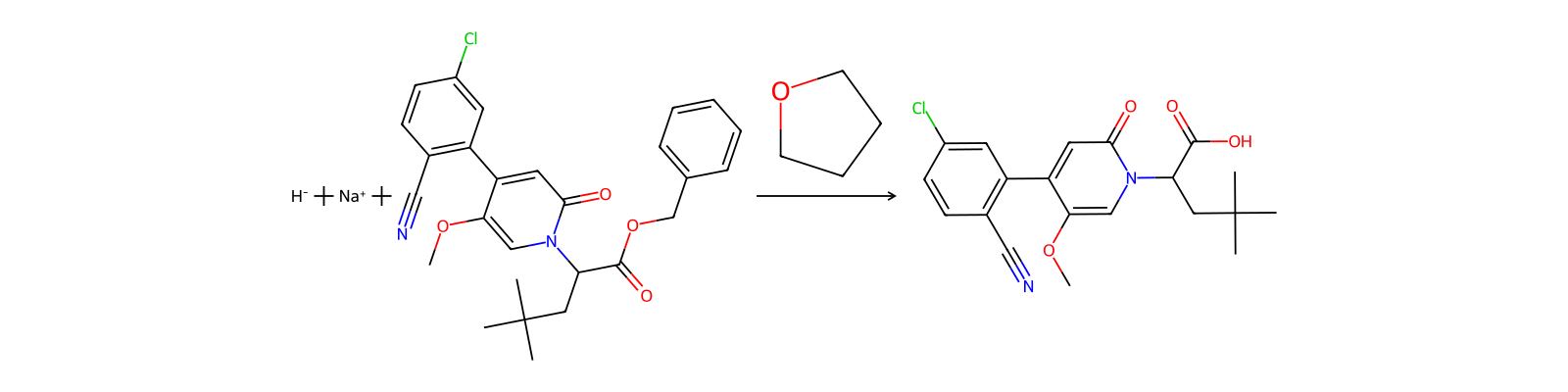
[H-].[Na+].[Cl:3][C:4]1[CH:5]=[CH:6][C:7]([C:35]#[N:36])=[C:8]([C:10]2[C:15]([O:16][CH3:17])=[CH:14][N:13]([CH:18]([CH2:29][C:30]([CH3:33])([CH3:32])[CH3:31])[C:19]([O:21]CC3C=CC=CC=3)=[O:20])[C:12](=[O:34])[CH:11]=2)[CH:9]=1>C1COCC1>[Cl:3][C:4]1[CH:5]=[CH:6][C:7]([C:35]#[N:36])=[C:8]([C:10]2[C:15]([O:16][CH3:17])=[CH:14][N:13]([CH:18]([CH2:29][C:30]([CH3:32])([CH3:33])[CH3:31])[C:19]([OH:21])=[O:20])[C:12](=[O:34])[CH:11]=2)[CH:9]=117.5 mg (438 μmol, 60% in mineral oil) of sodium hydride were added to a solution of 140 mg (292 μmol) of benzyl 2-[4-(5-chloro-2-cyanophenyl)-5-methoxy-2-oxopyridin-1(2H)-yl]-4,4-dimethylpentanoate (racemate) in 5 ml of THF (not dry), and the mixture was stirred for another 15 min. The reaction was terminated by addition of 5 ml of saturated aqueous ammonium chloride solution, 10 ml of dichloromethane and 0.5 ml of hydrochloric acid (1N). The phases were separated and the aqueous phase was extracted three times with 5 ml of dichloromethane. The combined organic phases were dried over sodium sulphate and filtered, and the solvent was removed under reduced pressure. The residue corresponded to the title compound and was used for the next step without further purification. Yield: 110 mg (83% of theory, purity 86%)